
POSTS BY AUTHOR
Jordan VELA
CHIEFS COLOR CLASH: PNG CHIEFS AND NZ RUGBY FACE POTENTIAL BRANDING SIMILARITIES
The PNG Chiefs is yet to officially launch its club’s logo and branding colors as they prepare for their 2028 NRL entry.While preparations continue, New Zealand media reports have highlighted concerns regarding the club’s name and possible branding similarities with the New Zealand Rugby team, Chiefs.
According to a report by Stuff.co.nz published on November 1, 2025, New Zealand Rugby reportedly sought legal advice regarding trademark protection in Australasia following the introduction of the PNG franchise during the 2025 PM’s XIII match at the Santos National Football Stadium in Port Moresby.
The report states that concerns relate to potential similarities in branding and colour schemes. The Waikato-based Chiefs traditionally use red, black, and yellow colours also associated with Papua New Guinea’s national identity.
In a statement published by Stuff.co.nz, New Zealand Rugby, it stated, “New Zealand Rugby is aware that there are examples of the Chiefs name used by teams in different sporting contexts internationally.”
“Our focus is on protecting the Chiefs trademark in Australasia, where our rights date back to the team’s inception when Super Rugby began in 1996.”
“We can confirm we have corresponded with the Australian Rugby League Commission about their decision to name a new team the Chiefs and are working in good faith toward an outcome that works for all parties.”
Meanwhile, PNG HAUSBUNG spoke with the PNG Chiefs General Manager Michael Chammas, during the Alex Johnston signing press conference held yesterday, where he claimed was not aware of any issues regarding a branding clash with the New Zealand franchise.
“We have not heard of this issue, but if there was a problem then the NRL would not accept the team's name as Chiefs,” he said.
“We therefore don’t have those sorts of issues. The NRL has done their homework.”
While the NRL has not issued a formal public comment, reports indicate that the Australian Rugby League Commission has specifically registered the name “PNG Chiefs” rather than “Chiefs” alone.
Furthermore, despite discussions regarding trademarks and branding, the name “Chiefs” is used by several sporting teams internationally across different competitions and codes.
Published on May 7, 2026
ALEX JOHNSTON OFFICIALLY BECOMES CHIEFS 002
It is now official. NRL’s top try scorer Alex Johnston has signed with the PNG Chiefs, becoming the club’s second player and the first national representative to join the squad.After weeks of rumours and debate across the NRL community, Johnston has now put pen to paper.His signing was confirmed today, 6 May, by PNG Chiefs General Manager Michael Chammas at Santos National Football Stadium in Port Moresby.“It is a historic day today as we sign Alex Johnston as our second inaugural player for PNG Chiefs 2028,” Chammas said.He also acknowledged the support of the South Sydney Rabbitohs, where Johnston is currently playing and is expected to remain through the 2027 season before joining the PNG Chiefs in 2028.Johnston, who made his NRL debut in 2014, has spent over a decade with the Rabbitohs and remains one of the competition’s most consistent try scorers.The deal is for one year, with an option to extend depending on Johnston’s form and decision.“The contract is a one-year deal, and it will depend on Alex if he feels able to continue and extend,” Chammas said.PNG Chiefs CEO Lorna McPherson said Johnston’s signing is a major boost for the club and an inspiration for young players.“He represents passion for rugby league in the country,” she said.She also highlighted what he will bring to the team.“He brings discipline and experience, which is fantastic.”
Published on May 6, 2026
BLUE MOUNTAIN CROWNED FIRST BNL CHAMPIONS, PNG PEPES SELECTION KICKS OFF
Blue Mountain Shallow Tail have been crowned the inaugural Butterfly Netball League (BNL) champions after edging Sepik Green Moon 45–44 in a thrilling grand final on Sunday, May 3rd.
The match lived up to expectations, with neither side leading by more than two points at any stage.
Blue Mountain Shallow Tail held a narrow 12–11 lead at the end of the first quarter, before Sepik Green Moon fought back to take a 24–22 advantage into halftime.
Momentum shifted again in the third quarter, with Blue Mountain reclaiming the lead 33–32, setting up a tense final period. In a neck-and-neck finish, they held their composure to secure a one-point victory.
In the third-place playoff, Alexander Birdwing defeated Island Monarch 47–45 after a strong comeback, overturning a seven-point deficit in the third quarter.
Beyond the results, the competition highlighted emerging talent, with players showing the ability to perform under pressure and deliver at a high level.
Now with the competition concluded, attention turns to national selection, where top performers from the four teams will be considered for the PNG Pepes squad ahead of the Tonga Cup qualifiers in September.
PNG Netball Executive Coordinator, Lynette Maha, said the Butterfly Netball League is Netball PNG's development pathway initiative to identify the best local talents to make the National Selection.
“The best players from each club will now be selected into the PNG Pepes draft squad, alongside our international players based in Australia and New Zealand,” she said.
An estimated 15 to 20 players from the BNL are expected to be selected, with the squad list to be announced in the coming weeks. Further selections will also be made from Papua New Guinean players competing overseas.
The squad will then go through a trimming phase before the final team is confirmed for the Tonga Cup qualifiers in September.
Published on May 5, 2026
MT HAGEN RUNWAY UPGRADE SIGNALS NEW ERA FOR HIGHLANDS AVIATION
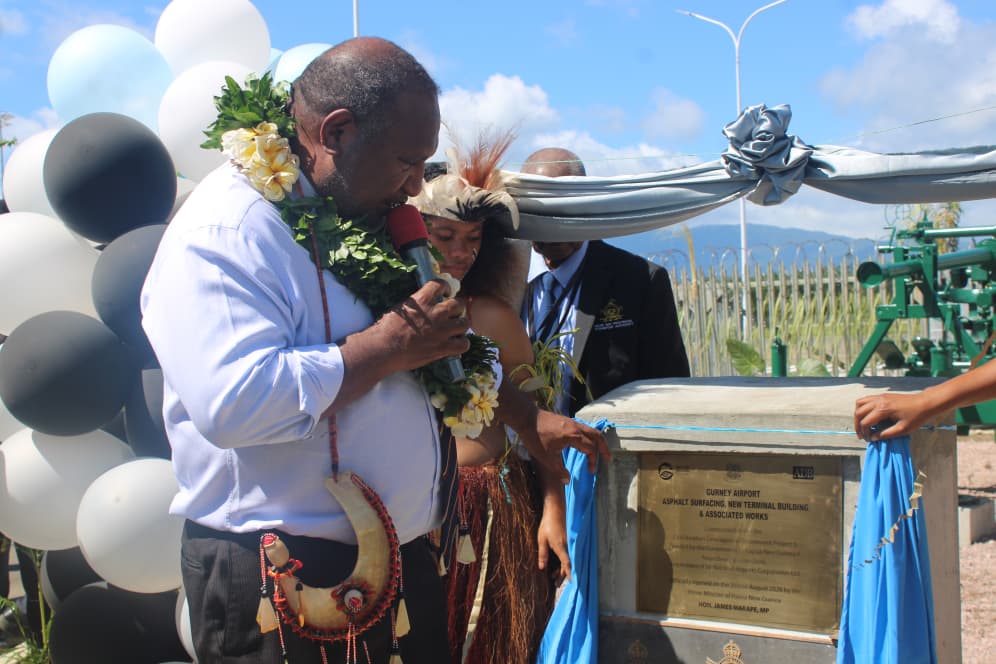
Mt Hagen, in Western Highlands province, is entering a new phase of aviation development following the official launch of a K39.4 million runway upgrade at Kagamuga Airport last week.
Civil Aviation Minister Wake Goi, announced the project on April 28, describing it as a major step forward for infrastructure development in the Highlands region.
In his keynote address, Minister Goi acknowledged the patience of leaders and communities in Western Highlands, as well as neighbouring provinces including Simbu and Enga, highlighting the growing demand for an airport capable of handling larger aircraft.
He said the project is a key priority for the National Government and is being funded internally through the National Airports Corporation (NAC) to ensure Mt Hagen remains a major aviation hub, second only to Port Moresby.
NAC Acting Managing Director Dominic Kaumu, said the upgrade will replace the existing bituminous runway surface with a more durable asphalt concrete overlay.
He confirmed that K4 million has already been paid to China Harbour Engineering Company (CHEC) to mobilise materials and begin work.
Mr. Kaumu said the upgrade is necessary to support Air Niugini’s transition to larger aircraft, including the Boeing 737 and Airbus A220 fleet, which will increase passenger capacity on Highlands routes.
He added that the project is expected to be completed by December 2026 to accommodate increased travel demand during the Christmas period.
Meanwhile, Western Highlands Governor Wai Rapa, welcomed the project, saying delays in the past had caused concern among leaders and the business community.
He described Kagamuga Airport as a critical gateway for the region, with millions of people passing through the province, placing pressure on infrastructure and public services.
Governor Rapa also urged contractors to ensure high-quality work, noting that previous upgrades had not lasted, and called on the community and security forces to support the project and protect workers during construction.
Minister Goi also outlined immediate measures to improve the airport environment, including plans to relocate nearby markets and enforce restrictions on betelnut and cigarette sales around the terminal area.
He said these changes are part of broader efforts to modernise airport operations ahead of future developments under the Civil Aviation Development Investment Program Phase Three (CADIP III), which is expected to include further runway extensions and terminal upgrades from 2028.
The Minister also encouraged greater participation in aviation training programs, emphasising the need to prepare a local workforce to support the country’s expanding aviation infrastructure.
Published on May 3, 2026
CIVIL AVIATION SET FOR BREAKAWAY UNDER GOVERNMENT REFORM PLAN
The country’s Civil Aviation department is laying the ground-work for a major transformation of its aviation sector, with plans to establish civil aviation as an independent department while rolling out nationwide infrastructure upgrades.
The initiative is being delivered under the Civil Aviation Development Investment Program Phase Two (CADIP II), supported by the Asian Development Bank, targeting key airports and systems across the country.
The recent ground-breaking of a new air traffic control tower in Goroka, marks just one phase of a broader strategy aimed at improving safety, efficiency, and national connectivity.
Minister for Civil Aviation Wake Goi, said the government is focused on delivering tangible results rather than maintaining the status quo.
“We want to see things moving; we don’t want to stay and have nothing happen,” he said.
He said the project forms part of a wider national development agenda aligned with Papua New Guinea’s Medium-Term Development Plan.
The Minister also outlined a broader vision for the sector, including potential multi-billion-kina investments to modernise Jacksons International Airport and the continued rollout of future CADIP phases across the country to decentralise aviation infrastructure.
As part of ongoing reforms, the government is also pursuing the establishment of civil aviation as a standalone department, separate from the wider transport sector, to drive specialised growth, faster decision-making, and stronger regulatory oversight.
Industry leaders say modernising aviation systems is critical for a country like Papua New Guinea, where air transport is not a luxury but a lifeline connecting remote communities, businesses, and essential services.
Published on May 2, 2026
K15 MILLION SIX-STORY CONTROL TOWER BREAKS GROUND IN GOROKA
Goroka is now stepping into a new aviation era with the ground-breaking of a modern six-story air traffic control tower this week in Goroka, Eastern Highlands Province.
The K15 million project funded by the Asian Development Bank, was officially launched, drawing senior government officials, aviation authorities, and industry leaders to mark the milestone.
The new tower will replace the ageing facility at Goroka Airport, which has struggled for years with limited space and outdated systems that have restricted both capacity and efficiency in managing air traffic.
Minister for Civil Aviation Wake Goi, said the project reflects the government’s push to deliver real, visible development.
“We want to see things moving; we don’t want to stay and have nothing happen,” he said.
Designed to support 24-hour operations under modern safety standards, the facility is expected to significantly improve air traffic control reliability, especially in the Highlands region, where difficult terrain and unpredictable weather have long challenged aviation safety.
Meanwhile, Managing Director of New Sky Pacific Limited Graham Blythe, said the upgrade will directly benefit airlines and passengers.
“For airlines and operators, it means improved reliability and enhanced safety,” he said.
On the other hand, Eastern Highlands Governor Simon Sia, described the new tower as a major leap forward from the current structure, which could only accommodate a small number of personnel.
“Now you look at this new building, it is a six-story tower for this region,” he said.
Beyond aviation, the project is expected to strengthen Goroka’s role as a regional hub, supporting the movement of coffee, fresh produce, and critical medical supplies across the Highlands.
Governor Sia also called for future planning, including feasibility studies for relocating Goroka Airport to support urban expansion, alongside immediate improvements to passenger screening systems.
Published on May 2, 2026
PNG CHIEF CENSOR WARNS OF RISE IN LOCAL EXPLICIT CONTENT
The conversation around explicit content in Papua New Guinea is no longer just about what comes from outside. It is changing shape, and quietly, it is moving closer to home.
With growing concern over how digital platforms are influencing young people, Chief Censor of the Office of Censorship Jim Abani, spoke to PNG HAUSBUNG to clarify what is really happening behind the scenes.
For years, the country’s focus remained on blocking foreign content. While that was once the primary frontline, that line is now starting to blur.
“Actually, our focus was on what was coming in from outside,” Mr Abani said, explaining how censorship efforts were initially designed to filter imported material.
Now, technology has shifted the game. He acknowledged that while there has been limited reporting of locally produced explicit content, the rise of mobile access and digital tools is opening that possibility.
“I believe with the infrastructure that we built and now going online, we will come across this in the coming years.”
That shift matters because once production becomes local, control becomes harder, distribution becomes faster, and the impact becomes more personal.
Behind the scenes, efforts are already underway to respond. The Office of Censorship is working alongside the National Information and Communications Technology Authority (NICTA) to identify and block harmful content.
“We identify prohibited content and provide that to NICTA to work with service providers to block it,” Mr Abani explained.
But even that system has limits; the internet does not sit still, and neither do the people using it. The fight is not just technical; it is human.
Through the Censorship Ambassador School Program run in partnership with the National Department of Education, the focus is shifting toward awareness to the young minds, because the real issue is not just access, but behaviour.
Cyberbullying, online harassment, and more serious forms of exploitation are rising alongside content exposure.
“These issues are now emerging in Papua New Guinea,” Mr Abani said, pointing to a growing pattern that cannot be ignored.
When it comes to those affected, especially young girls, the response is limited but critical.
“The only support we can give is counselling as we refer them to relevant agencies.”
“It is not a perfect system, but it is one of the few lifelines currently in place.”
In addition, there is also a legal side building in the background. Authorities are pushing for stronger collaboration across agencies, using existing laws to identify offenders and bring them into the justice system.
Yet, beyond law and enforcement, the message becomes more personal- less about control but more about responsibility.
“Censorship starts at home,” Mr Abani said, offering the statement not as a slogan, but as a reality check.
In a country where technology is moving faster than guidance, the first line of control is no longer the system, it is the individual.
What this conversation reveals is simple, but unsettling as Papua New Guinea is no longer just consuming digital influence but it is beginning to create it and that changes everything.
Once the problem becomes local, it stops being distant. It becomes cultural, it becomes social, it becomes real.
Therefore, the question is no longer whether the system can keep up, but whether the people will.
Published on May 2, 2026
POM CORPORATE BASKETBALL RETURNS
The Port Moresby Corporate Basketball Competition is back, and this year it’s louder, bigger, and harder to ignore.A total of 29 teams have signed up, a sharp jump from 20 last year, showing just how fast the game is growing in the corporate space.
What started as a simple competition is now turning into a movement. Companies are not just playing for wins they’re bringing in staff, families, and supporters, turning game days into social events where business meets community.
Games Coordinator Jordan Sere said the support from companies has been key to the competition’s rise.
“We thank all corporate organizations for backing this competition, promoting an active lifestyle while giving staff and families a chance to enjoy the game and connect,” he said.
This year also welcomes a fresh wave of teams stepping onto the court for the first time.
Among them are TCB Travel, National Judiciary and Staff Services, CPL Group, IRC, Water PNG, Islands Petroleum, Weatherman Capital Advisors Limited, Kopunye Lawyers, Pacific Helicopters, TISA Bank, and NCSL adding new energy and competition to the league.
The season is already underway, with teams battling through the early rounds and each pool will face off twice before the top sides push into the finals, where the real pressure begins.
Organizers are also thinking bigger this year, planning two full seasons.
The first will wrap up in June with finals, while the second will run from August to November.
This schedule also gives space to prepare a Port Moresby side for the Masters Competition in the Gold Coast later this year.
Published on May 1, 2026
MOBILE PHONE USE IN SCHOOLS TO BE LIMITED
The National Department of Education (NDoE) is stepping up efforts to control mobile phone use in schools, rolling out a nationwide training program in partnership with the Office of Censorship through the Censorship Ambassador Schools Program (CASP) ahead of the launch of its new Mobile Phone Policy.Eighteen education officials from the Momase and New Guinea Islands regions completed the latest phase of the program in Port Moresby, as part of a broader push to prepare schools for stricter enforcement.
This three-day training, held from April 27 to 29, 2026, at Dixie Bungalow located at 17 Mile, brought together secondary school inspectors, guidance officers, and NDoE officials to strengthen awareness and implementation of education policies.
The initiative comes as concerns grow over the impact of mobile phone use on students, particularly exposure to harmful online content and its effect on behaviour and learning.
Speaking at the certification ceremony, Chief Censor Jim Abani stressed the urgency of the issue.
“Today’s generation is living in the time of influence from all forms of media communication,” he said.
He warned that students are increasingly exposed to content that may negatively affect their behaviour and learning.
The CASP program is a joint initiative between the NDoE and the Office of Censorship, aimed at equipping education officers to act as policy advocates within schools and communities.
These officers are expected to return to their respective provinces to support awareness programs and help enforce upcoming policy measures.
Among those measures is the soon-to-be-launched Mobile Phone Policy, which will enforce a zero-tolerance approach in elementary and primary schools nationwide.
For secondary schools, mobile phone use will be allowed under controlled conditions for educational purposes.
Meanwhile, NDoE First Assistant Secretary for Guidance and Counselling, Philip So’on, also spoke on how technology has changed student behaviour.
“We never knew what pornographic until mobile phones came in, because in the past it was in magazines that were smuggled in,” he said.
He added that managing this shift will require support from both schools and parents.
Under the policy, schools will control mobile phone use during instructional hours, while parents are expected to guide students outside school.
Officials say the CASP training is critical to ensuring the policy is effectively implemented across the country.
The Port Moresby session marks the final phase of the training rollout, following earlier programs in the Highlands and Southern regions.
With the groundwork now in place, the NDoE is expected to formally launch the Mobile Phone Policy in the coming months.
Furthermore, the move signals a nationwide push to strengthen discipline, guide student behaviour, and create safer learning environments in an increasingly digital age.
Published on April 30, 2026
MOBILE PHONE POLICY TO ENFORCE ZERO TOLERANCE IN ELEMENTARY & PRIMARY SCHOOLS
The National Department of Education (NDoE) is preparing to launch a Mobile Phone Policy enforcing zero tolerance on mobile phone use in elementary and primary schools nationwide.The policy was outlined amongst other matters to improve education in Primary and Secondary school at the Momase and New Guinea Islands (NGI) Censorship Ambassador Schools Program (CASP) held at Sogeri, Central province.
Speaking to PNG HAUSBUNG, NGI Assistant Secretary for the Guidance and Counselling Division of NDoE, Allen Jim, confirmed the policy is currently in its final stages before official release.
“In assistance with the Policy and Planning Division, we have developed the Mobile Phone Policy. It has already gone through the process and is soon to be launched to schools,” he said.
The policy is aimed at addressing the growing influence of mobile phone use among students and the rise of negative online activities affecting school-age children.
Under the proposed guidelines, elementary and primary schools will enforce a zero-tolerance policy on mobile phone use.
For secondary schools, including Grades 7 to 12 and vocational institutions, mobile phones will be permitted only for approved educational and research purposes, under strict school control.
“From Grade 7 to Grade 12 and vocational levels, students may use phones for research purposes, but schools must control usage according to the Mobile Phone Policy,” Mr. Jim said.
The policy also places emphasis on parental responsibility, particularly after school hours, when students spend significant time on mobile devices.
“School hours are from 7:45am to 3:00pm. After that, responsibility shifts back to parents to support the Department in guiding proper mobile phone use,” he said.
The CASP initiative is a joint program between the National Department of Education and the Office of Censorship aimed at strengthening awareness and enforcement of education policies in schools.
It also trains guidance officers and school inspectors to support implementation across the country.
CASP has already conducted training sessions in Mount Hagen for the Highlands Region and in Central Province for the Southern Region, led by Assistant Secretary for Highlands and Southern Region Otto Wrangian Guidance and Counselling Division.
Published on April 28, 2026
G-FORCE CROWNED INAUGURAL NIGHT SHIFT CHAMPIONS
The all-boys dance crew G-FORCE was crowned the first Night Shift champions after edging out seven other top crews in a high-energy showdown held at Holiday Inn in Port Moresby city last night.The competition lit up the Holiday Inn Beer Garden, with each group delivering near-perfect choreography, sharp synchronization, and electrifying freestyle performances that kept the youthful crowd on its feet.
But it was G-FORCE that stood above the rest.
Dressed in matching blue reflective overalls, caps, and sneakers, the group owned the stage with a performance that matched the night's theme and never missed a beat.
Crew leader Andrew Tareq Aouine said the win was the result of hard work and unity.
“It’s a win-win because hard work pays off. That is why we are so proud and excited,” he said.
He added that the team is driven by passion and always pushes beyond limits when given the chance to perform.
“When we have the opportunity to showcase our talent, we just keep pushing and there is no stopping us.”
Aouine said the group’s purpose goes beyond performance.
“We are not just about dancing, but we want to aspire to inspire.”
Before receiving the K5, 000 prize sponsored by Pacific Industries though Sting Energy Drink, the crew paid tribute to Wan Squad, acknowledging them as their inspiration.
“They have been our inspiration since day one and we are proud of them for representing Papua New Guinea on the world stage.”
The inaugural Wan Squad Night Shift competition is part of a broader initiative led by two-time world hip-hop champions Wan Squad, with support from Pacific Industries through Sting Energy Drink.
Meanwhile, Pacific Industries Director Everett Chue said the company’s involvement aims to promote dance as a positive outlet for young people.
“Dance is a form of sport that allows people to express themselves. It brings culture and communities together,” he said.
He added that Night Shift offers a unique platform, targeting an older audience in a safe and vibrant night-time environment.
“It’s a club-style format that adds to the platform we’re building here in Papua New Guinea.”
The competition aligns with Wan Squad’s wider dance development program, bringing together participating crews as part of a growing movement to shape dance culture across the country through workshops, competitions, and mentorship.
Published on April 26, 2026
BROTHER ANTONY LOOKS TO RESTORE DE LA SALLE’S NATIONAL RANKING IN 2027
La Salle Technical Secondary School Principal Brother Antony is now looking at restoring De La Salle Bomana Secondary School’s national ranking by 2027.
The once high-performing all-boys school, has shown signs of slipping in recent years, falling out of national rankings in 2024 and 2025, while La Salle Technical Secondary has risen to the top following its transition into a recognized secondary school.
Concerns over discipline have also surfaced, including a 2023 school fight involving Laloki Secondary school, and a recent incident at Gordon’s bus stop in 2025, where students drew public and police attention.
Speaking during a Grade 10 parents meeting held on Wednesday, April 22, Brother Antony addressed these concerns, saying the school still holds a special place in his heart.
“I love my De La Salle boys. They are very good boys, and they always listen to me,” he said.
He clarified that his move to La Salle Technical was part of a broader plan to register the school under the Department of Education and push it to the top national rankings.
Brother Antony said a return to De La Salle is possible if current targets are achieved.
“This year, if both Grade 10 and 12 at La Salle Tech rank top in the country, then next year I will go back to De La Salle.”
He added that such a move would likely be supported by the Teaching Service Commission, as both schools fall under the Lassalian family.
“When I write to the Teaching Service Commission to render my service to De La Salle, it’s most likely they will say yes.”
In addition, Brother Antony previously transformed De La Salle after his arrival in 2018, lifting the school into the national rankings within a few years.
Between 2019 and 2021, the school consistently ranked among the top schools in the country, while major infrastructure developments were also carried out with support from the De La Salle Brothers, including a new assembly hall, ablution blocks, and administration facilities.
Before this turnaround, the school had struggled with discipline and reputation following administrative transitions in the early 2000s.
Since moving to La Salle Technical in 2022, Brother Antony has overseen its transformation from a vocational college into a government-recognized secondary school.
In 2024, its Grade 10 students ranked first in the country, followed by both Grade 10 and 12 topping national rankings in 2025.
His potential return signals a renewed push to restore De La Salle’s academic performance and discipline.
Published on April 25, 2026