

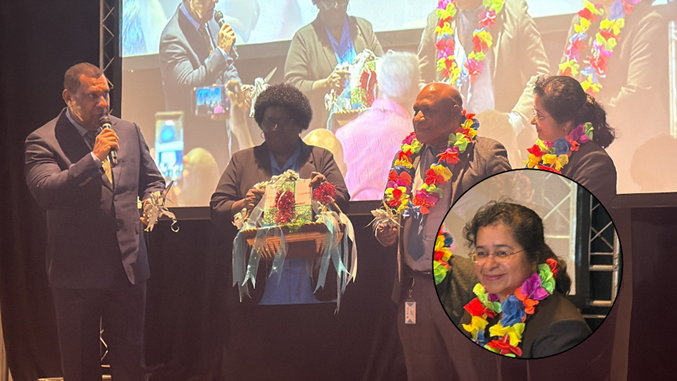
The United Nations Population Fund (UNFPA) is calling for greater access to family planning information and services in Papua New Guinea, saying women and couples must be empowered to make informed decisions about the size of their families.
Speaking during the launch of the recent 2024 National Population Census data launch, United Nations Population Funds Country Representative for Papua New Guinea, Saira Shameem highlighted the gap between the number of children people want and the actual fertility rate in the country.
Ms Shameem said the 2016 Demographic and Health Survey found that men and women in Papua New Guinea wanted an average of three children.
However, the 2022 Socio-Demographic and Economic Survey recorded an average of 3.72 children per woman, with statistical projections indicating the figure could reach 3.22 by 2027.
Ms Shameem said addressing this gap requires better access to information, family planning products and reproductive health services.
“We must ensure that every woman and couple has information, resources, and freedom to decide whether, when, and how many children to have.”
Shameem stressed that voluntary family planning should go hand in hand with women's empowerment, quality education, skills development and improved healthcare.
“Investing in children's health and education to ensure families can provide better opportunities for their children.”
She warned that rapid population growth could place additional pressure on already constrained public services and resources, including schools, healthcare facilities, housing, employment and infrastructure.
While a growing population offers opportunities for economic development through an expanding workforce, the representative said the country must ensure its development planning keeps pace with population changes.
The UNFPA reaffirmed its commitment to supporting the Government of Papua New Guinea and the National Statistical Office in strengthening the use of reliable population data to guide policies and development programmes.
Ms Shameem said access to accurate population statistics would help policymakers make informed decisions and direct resources towards the needs of communities.
The call reinforces the importance of ensuring women and couples across Papua New Guinea have access to the information and voluntary services they need to make informed family planning decisions.