

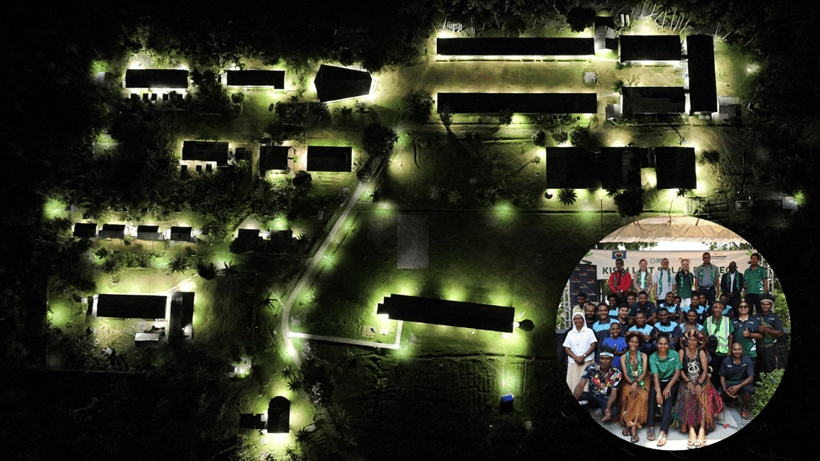
Students of Don Bosco Araimiri Secondary School in Gulf province now have access to reliable electricity after more than 40 years.
Funded by the Australian Government, the Kisim Lait project installed solar systems throughout the school, lighting up classrooms and dormitories for more than 300 students.
It also installed solar systems for 25 homes, 40 streetlights and an aid post for communities in Akapiru and Herehere villages in Gulf Province.
Representatives from the Gulf Provincial Administration, the Salesians of Don Bosco and the Australian High Commission co-hosted the event to mark completion of the Kisim Lait project.
Speaking at the event, Fr Srimal Silva, representative for the Salesians of Don Bosco, reflected on the project’s benefits. “Our students didn’t just receive power through this project.
A wide range of curriculum development, health and occupational safety matters were also addressed, giving our school a more complete educational and safety upgrade,” said Fr Silva. Students in Araimiri are already seeing the benefits of clean, reliable energy.
Solar power now supports a new computer lab, lights communal spaces for evening study, and expands access to digital learning opportunities and online resources.
The Australian High Commission’s Minister-Counsellor for Economics and Infrastructure, Dr Cate Rogers, said the project’s success was a testament to strong partnerships.
“The Kisim Lait project is successful because of the strong partnership fostered between our government partners, local partner and also the local community,” Dr Rogers said.
Solar streetlights are improving safety and wellbeing across the community, especially for women and girls.
At the same time, reliable power at Akapiru’s aid post is supporting better healthcare by keeping vaccines and medicines refrigerated and allowing health workers to deliver essential services around the clock.
Student representative Pius Toto reflected on what the project means for students. “This project is much more than just solar panels and wires. To us, it represents hope. It means our students can now read and study comfortably in the dormitories and classrooms at night, and our teachers have the modern resources to give us a high-quality education,” Pius said.
The Kisim Lait project demonstrates Australia’s commitment to working alongside Papua New Guinea to improve access to clean, affordable energy for remote communities across the country.