

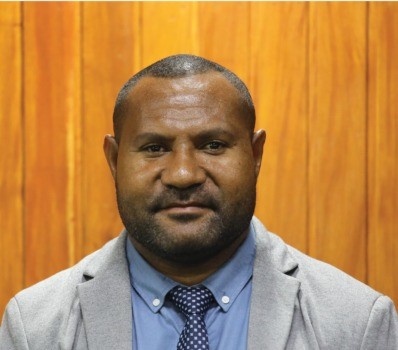
Papua New Guinea (PNG) must move away from a predominantly reactive approach to disasters and invest more heavily in preparedness, early action and risk reduction.
This is according to Minister for Health and National Emergency Services Dr Billy Joseph, who said PNG has become accustomed to responding once disasters occur, but responses can be delayed or inadequate when communities and authorities have not prepared beforehand.
He said disaster management should instead be treated as a continuous cycle involving awareness, preparedness, response and recovery.
“Response is important, but that response is done properly and adequately when we are aware and when we prepare.”
Dr Joseph said preparedness involves far more than having money available once an emergency strikes.
It requires trained personnel, logistics, warehouses for relief supplies, communication systems, emergency plans and clearly established procedures that can be activated when needed.
He used his experience as a doctor to explain the importance of detailed emergency planning.
He referred to a Medical Emergency Response Plan, which establishes who should be contacted, what procedures should be followed and who has authority to activate a response.
Dr Joseph said this level of detailed planning does not yet exist consistently across PNG’s provincial and national disaster-management structures.
“That kind of level of detailed preparedness doesn't exist in our provincial disaster management centers.”
He said international partners, including Australia, the United States and New Zealand, are helping PNG strengthen its preparedness infrastructure.
This includes support for warehouses and a new national facility intended to bring key emergency-response functions together.
Dr Joseph said the National Government is also seeking to address fragmentation across emergency services by creating a more coordinated system.
He said the National Security Council has decided not to establish a separate National Emergency Management Authority, but instead to strengthen
coordination across existing emergency functions.
The Minister said dedicated disaster personnel are needed at national, provincial and district levels because disasters can occur at any time.
“Disaster can happen any time. And when we are ready or not, it doesn't care.”
The need for stronger preparedness has been highlighted by recent emergencies, including Cyclone Maila, El Niño and landslides.
Dr Joseph said disasters are first experienced at the community, district and provincial levels, making strong local systems critical to an effective national response.
The Provincial Disaster Centre Institutional Capacity Assessment is expected to help identify where those systems need to be strengthened.
Dr Joseph said the assessment should lead to a practical roadmap covering immediate, medium- and long-term priorities.
He is also calling for the findings to be used in government planning and budgeting rather than being left as a report.
“The assessment gives us the evidence. Our responsibility now is to use that evidence to help our communities.”
He said the country must ensure that disaster-management plans are supported by capable people, financing, information systems, leadership and established procedures.
The Minister said PNG’s objective should be a disaster-management system capable of anticipating risks, understanding community needs and acting before emergencies escalate.
That shift, he said, will be critical as PNG continues to face earthquakes, volcanic eruptions, tsunamis, floods, landslides, droughts, severe weather events, cyclones and other emergencies.
“A stronger disaster management system that can better anticipate risks, understand needs” is the objective for the country.