POSTS BY AUTHOR
Tasminnie ISIMELI
SIX-PILLAR FRAMEWORK PROPOSED TO DRIVE CLIMATE ACTION IN PNG
A six-pillar framework to strengthen gender equality and social inclusion is being advanced as part of Papua New Guinea’s updated climate commitment under NDC 3.0 with experts stressing the need to turn policy into practical action.Speaking during the CCDA consultations, social anthropologist Dr Jennifer Gabriel said the proposed framework is designed to ensure inclusion becomes a core foundation of the country’s climate strategy rather than an add-on.
She explained that the plan focuses on six key areas: systemic mainstreaming, participatory leadership, inclusive finance, responsive analysis, institutional capacity building and data-driven accountability.
Under the framework, gender considerations would be embedded across major climate sectors such as energy, infrastructure and agriculture.
This includes targeted training for women and youth in renewable energy skills like solar installation and maintenance, particularly in rural and off-grid communities.
Dr Gabriel said the approach also aims to move beyond symbolic consultation by giving women and young people meaningful roles in decision-making at national, provincial and community levels.
She noted that women already play important informal leadership roles in areas such as water management, health and food security and these contributions should be recognized.
Inclusive finance is another priority, with proposals for dedicated funding windows to help women- and youth-led small businesses access climate finance for mitigation and adaptation projects.
The framework calls for gender- and youth-responsive analysis at the design stage of climate programs to ensure benefits reach vulnerable groups.
It also emphasizes ongoing training to build a skilled workforce for the green economy, rather than one-off workshops.
Improved data collection will be required to track the social impacts of climate initiatives, including the use of sex- and age-disaggregated data to meet transparency and reporting requirements.
Proposed sector actions include appointing more women and youth to decision-making bodies in the energy sector, supporting women-led climate-smart agriculture initiatives and directing climate finance toward community-level health and nutrition programs.
Faith-based organizations, NGOs and civil society groups are expected to play a key role in implementing and monitoring the initiatives at community level as Papua New Guinea works to ensure its updated climate commitments are inclusive and action-focused.
Published on February 16, 2026
CHURCH HEALTHCARE FIGHTS SORCERY-RELATED VIOLENCE IN PNG
Beliefs in sorcery and witchcraft are very common in Papua New Guinea and accusations can lead to violence, fear and even death, something which organizations including the churches, are trying to seriously address.Church-run health facilities provide about half of rural healthcare and play an important role in helping people affected by sorcery accusation-related violence (SARV).
Research from November 2023 to August 2024 looked at six church-run health centers in Enga, Simbu, and Eastern Highlands provinces.
Researchers spoke with 122 people including doctors, nurses, church leaders and SARV survivors. They used interviews, group discussions, observations and reviewed previous studies. The study found that church health workers often provide emergency treatment, counselling and practical help to SARV survivors.
Staff focus on medical care based on science not personal beliefs about sorcery. Clergy and community leaders help protect survivors and support ethical care.
Some health centers show excellent practices. Yampu Health Center in Enga offers free treatment, safe recovery and ongoing support with the help of the Catholic Diocese.
Mingende Hospital in Simbu and others provide compassionate care even with limited resources. Staff keep survivors safe, respect their privacy, and treat them with dignity.
Priests and respected community members sometimes rescue people who have been accused, and explaining the medical cause of death helps prevent rumors about sorcery.
Meanwhile, the children orphaned by SARV receive education and support.
Br Martin Tnines, Director of the Melanesian Institute said, “Church healthcare workers are often the first line of protection for survivors of sorcery accusation-related violence. Their dedication to ethical, compassionate care not only saves lives but also helps restore dignity and hope to the affected communities.”
There are still challenges. There is little SARV-specific data, not enough trained counsellors and many staff don’t know the relevant laws. Also, collaboration with other organizations is limited.
The report recommends hiring staff who provide fair, science-based care, training specialist counsellors for SARV survivors, teaching staff about SARV and related laws.
It also recommends working with police, local courts and community groups, visiting families to explain medical causes of death, advocating for SARV to be treated as a public health problem, offering free medical care and reports for SARV survivors, creating safehouses in high-risk provinces, keeping accurate, confidential SARV records and making written policies to guide care for SARV survivors.
Published on February 14, 2026
ESCAP BACKS PNG CLIMATE PLANS AT NDC 3.0 CONSULTATION
The United Nations Economic and Social Commission for Asia and the Pacific (ESCAP) has commended Papua New Guinea’s progress on climate reporting and planning during the second national consultation on the country’s Nationally Determined Contribution (NDC 3.0).Speaking at the consultation, Lorenzo Santucci praised the Climate Change and Development Authority for successfully submitting Papua New Guinea’s first Biennial Transparency Report, describing it as an important milestone under the Paris Agreement.
He also acknowledged the work underway to finalize the country’s updated NDC 3.0.
Santucci said the region is at a critical point in addressing climate change, noting that Asia and the Pacific account for a large share of global greenhouse gas emissions.
While recent reviews show some progress in climate ambition, emissions across the region are still rising.
He stressed that continuing with business as usual is not an option and called for greener economic growth models to avoid deeper climate risks and inequality.
ESCAP has been supporting Papua New Guinea in developing its climate commitments alongside partners including the United Nations Development Programme, the Commonwealth Scientific and Industrial Research Organization, the United Nations Environment Programme and the NDC Partnership.
Support has included strengthening national capacity to improve greenhouse gas inventories and helping draft the updated NDC.
Santucci said the consultation is an important step toward finalizing a strong NDC 3.0 that will guide Papua New Guinea’s climate and development work in the coming years.
He thanked partners and participants for their active involvement, noting the strong turnout reflects the country’s commitment to climate action.
He encouraged participants to provide input to help ensure the final NDC is inclusive, practical, and able to support Papua New Guinea’s long-term development and climate goals.
Published on February 13, 2026
UNDP CALLS FOR STRONGER, INCLUSIVE CLIMATE ACTION IN PNG
The United Nations Development Programme (UNDP) has called for strong, inclusive and well-funded climate plans as Papua New Guinea reviews its next round of Nationally Determined Contributions (NDC 3.0).Speaking at a national consultation workshop, Nicholas Booth, UNDP Resident Representative in Papua New Guinea, said the country must make climate action a part of all its development plans to cope with climate risks.
He thanked the Climate Change and Development Authority and other partners for supporting the consultation and described the NDC review as an important step in shaping the country’s future.
Booth said Papua New Guinea is very vulnerable to climate change and must make sure climate adaptation and mitigation are included in every sector.
“Nothing is more important in a country where climate change affects daily life than making sure the NDCs give us the right plan,” he said.
He added that the commitments must lead to real actions, policies, laws, funding, and clear ways to implement them.
Participants were asked to check whether the proposed NDC 3.0 targets are realistic, properly funded, and match national priorities.
Booth said energy access is one of the most important areas in the new plan.
He said many countries are on track to provide everyone with reliable, affordable and renewable energy, but PNG is behind.
The national grid only reaches a small part of the population.
Renewable energy is key to reaching about 70 percent of people by 2030.
Access to energy, he said, is important for schools, hospitals, businesses and daily life.
He also welcomed the focus on gender equality, social inclusion and youth empowerment in NDC 3.0.
Gender inequality, he said, is a major challenge in the country and women must have equal access to climate and energy programs.
With 60 percent of the population under 25, youth inclusion and support for people with disabilities must also be included.
Booth highlighted Papua New Guinea’s rich biodiversity and forests, saying they are important for nature-based climate solutions.
He encouraged participants to ensure these solutions are included in plans and matched with funding and government support.
He added that a green and blue economy could bring more opportunities for rural communities and make agriculture more climate resilient.
He warned that the success of the NDCs depends on enough funding and support from the government, private sector and development partners.
Participants were asked to give feedback to make sure the plans reflect the country’s needs and can be carried out successfully.
Booth said the consultation will help build a strong framework for Papua New Guinea’s climate action and its contribution to global efforts under the Paris Agreement.
Published on February 13, 2026
NATIONAL WORKSHOP SHAPES PNG’S 2030 CLIMATE GOALS
Papua New Guinea has begun national consultations on its next round of climate commitment with stakeholders meeting to review the draft Nationally Determined Contributions or NDC 3.0 ahead of submission under the Paris Agreement.The consultation workshop, hosted by the Climate Change and Development Authority (CCDA) with support from partners including UNDP and UN ESCAP, brought together government agencies, development partners, the private sector and technical experts to assess progress and shape the country’s climate targets through to 2030.
Acting CCDA Managing Director Debra Sungi acknowledged the support of international partners and local stakeholders, noting PNG has made steady progress since submitting its first NDC in 2016.
She said the draft NDC 3.0 outlines mitigation and adaptation targets across key sectors such as agriculture, forestry and land use, energy, transport, health and infrastructure.
Under its mitigation commitments, PNG aims to reduce emissions by 10,000 gigagrams of CO₂ equivalent in the agriculture, forestry and land-use sector while also pursuing policy-driven changes in transport and electricity.
Ms. Sungi said progress has been made in several areas particularly forestry and renewable energy, with PNG reportedly reaching its forestry mitigation target through work led by the PNG Forest Authority and partners.
The government is also advancing energy reforms including plans to transition 16 provinces from diesel-generated power to renewable sources such as solar, hydro, wind and geothermal.
She said the progress made so far provides a foundation to refine NDC 3.0 and ensure targets remain practical and achievable by 2030.
However, significant challenges remain especially in adaptation.
PNG estimates it will require about US$7.7 billion to implement its NDC targets with major funding gaps in climate-resilient infrastructure, early warning systems and health preparedness.
Access to multi-hazard early warning systems targeted to reach 70 percent of the population by 2030 remains a key priority, with limited progress so far.
The health sector was also identified as needing urgent support.
While food security and sustainable land-use initiatives have received backing from the Green Climate Fund, Adaptation Fund and bilateral partners, further investment is needed across sectors.
To strengthen climate finance, the government is working with the Bank of Papua New Guinea to develop a green taxonomy policy aimed at helping businesses access concessional funding for climate projects.
Authorities are targeting at least US$100 million annually in climate finance mobilization.
Looking ahead, PNG is considering new focus areas for NDC 3.0, including loss-and-damage financing and opportunities in blue carbon and carbon markets.
Nine carbon market projects are currently under review following new regulations introduced last year.
Ms. Sungi urged stakeholders to work collaboratively and align climate programmes with national priorities to ensure targets for 2030 can be achieved.
The consultation workshop will help refine PNG’s updated climate commitments before they are finalized and submitted under the Paris Agreement.
Published on February 12, 2026
EARLY GOALS COST TAHITI UNITED'S MATCH AGAINST AUCKLAND FC
Tahiti United FC head coach Samuel Garcia says early goals in each half proved costly after his side went down 4–0 to Auckland FC.Garcia said Tahiti United prepared well and showed good structure, particularly in the first half, but conceding early after kick-off in both halves disrupted concentration and game plans.
He acknowledged Auckland FC are operating at a higher level and described the match as an important learning experience for his players.
Tahiti United FC player Tevita Waranaivalu echoed that view, admitting there is a gap between the two sides but expressing confidence in the team’s long-term growth.
He said the squad is developing in a professional environment and believes continued training, unity and experience will help them improve.
Auckland FC head coach Luke Casserly said Tahiti United applied strong pressure early but improved decision-making and execution in the second half allowed his side to capitalise on key moments.
He praised the team’s defensive structure and the impact of substitutes, noting that early goals in both halves gave Auckland a decisive lift.
Auckland FC player, James Bayliss wearing number eight, was named Player of the Match after scoring and playing a key role in Auckland FC’s dominant performance.
Published on February 3, 2026
NARI HIGHLIGHTS CLIMATE CHANGE RESEARCH GAPS AT PRESS CLUB
National Agricultural Research Institute (NARI) Director General Dr Nelson Simbiken says Papua New Guinea (PNG) has the research knowledge and technologies needed to respond to climate change, but limited funding and access to information remain major challenges.
Dr Simbiken made the comments during the first National Press Club for 2026 on Wednesday, 28th January 2026, in response to a question from PNG HAUSBUNG on whether current research investments adequately address the growing impacts of climate change on smallholder farmers and national food systems.
He said NARI has been involved in climate change research across the country for more than a decade, noting that Papua New Guinea is highly vulnerable to climate shocks.
“Because our country is very vulnerable to climate shifts, even small changes can result in increased pest and disease outbreaks and greater impacts on already vulnerable communities,” Dr Simbiken said.
He said NARI has generated critical data and research findings to support government responses to climate-related shocks with technologies developed to suit different environments and levels of climate impact.
“We have all the information necessary to support the government to address climate shocks,” he said.
“That information is available at NARI research stations, and we are continuously advising the government on the impacts and how they can be addressed.”
However, Dr Simbiken acknowledged that access to this information remains limited, particularly for farmers in remote areas.
“One of the key gaps is that our technologies and research information are not yet fully digitized, which means farmers cannot easily access them from their own locations,” he said.
Dr Simbiken also raised concerns about long-term funding for agricultural research, pointing out that while commodity research institutes such as the Coffee Research Institute and the Cocoa and Coconut Research Institute receive funding through export levies, NARI relies largely on recurrent government funding.
“For more than 10 years, NARI received very limited public investment in capital expenditure,” he said.
He said government support has improved in recent years allowing NARI to begin rebuilding rundown infrastructure and invest in research capacity but stressed that the funding is not guaranteed.
“We are now seeing government investment coming in to support research, but this is only temporary,” Dr Simbiken said.
“What we need is sustainable research funding not only for NARI, but across the entire National Agricultural Research System.”
Dr Simbiken said NARI is recommending government intervention through an agriculture innovation grant scheme which would provide long-term fiscal support to strengthen research, innovation and extension services for farmers.
He said sustained investment in agricultural research is essential to protect smallholder farmers and ensure national food security, as climate impacts intensify.
Published on January 29, 2026
RESET@50 TO TRANSFORM FARMING IN PNG
Papua New Guinea’s agriculture sector is set to undergo a major transformation under a new long-term strategy designed to shift the country from subsistence farming to a commercially driven economy.
National Agricultural Research Institute (NARI) Director General Dr Nelson Simbiken says the “Reset@50” initiative is a strategic review and forward-looking framework that will guide agricultural research and development in Papua New Guinea over the next 50 years.
Dr Simbiken said the initiative is a critical pillar in implementing the National Agriculture Sector Plan 2024–2033, which aims to improve food security, strengthen rural livelihoods and drive economic growth.
He said Reset@50 is not simply a review of past performance but a comprehensive effort to modernize the national agricultural research system and reposition agriculture as a robust and commercially viable engine for national development.
“Agricultural research is the foundation of how we move the sector forward,” Dr Simbiken said, noting that PNG must move beyond incremental improvements and establish a coordinated, high-impact research system that responds to changing market demands.
As part of the reform, NARI is reviewing its legislation to address long-standing technological and policy gaps that have limited the scaling and commercialization of research outputs.
Dr Simbiken said the proposed amendments to the NARI Act will strengthen governance and accountability, improve operational efficiency and create legal pathways for research institutions to commercialize innovations and partner more effectively with the private sector.
He said a new National Agricultural Research System (NARS) policy framework will also be introduced to ensure alignment across government agencies, universities, research institutions, NGOs and the private sector.
The framework aims to reduce duplication, encourage collaboration and direct investment into priority value chains with the greatest potential for commercial growth.
Dr Simbiken said Reset@50 represents a shift in NARI’s role from being solely a research institution to becoming a strategic coordinator of the national agricultural innovation ecosystem.
He said the initiative is essential to transforming rural farmers into commercial producers, creating jobs and building a sustainable agriculture-based economy for Papua New Guinea.
Published on January 28, 2026
BREAKING THE SILENCE: THE FIGHT AGAINST FAMILY & SEXUAL VIOLENCE
Fear, cultural pressure, and economic dependence, continue to hinder many survivors of family and sexual violence from reporting abuse, despite the availability of police and support services.Acting Director of the Police Family Sexual Violence Directorate (FSVD), Chief Sergeant Eremugo Job said that many women come forward only when violence has escalated to life-threatening levels.
“Some survivors wait until the abuse becomes very serious or until someone is badly injured or killed which by then, may already be too late,” said Chief Sergeant Job.
The barrier to reporting is often built on the fear of retaliation from both perpetrators and their extended families.
“Women are threatened by their partners, pressured by family members and frightened that violence will continue or even lead to death if they report.”
Chief Sergeant Job said cultural practices including bride price, play a significant role in silencing survivors.
“Because bride price has been paid, some families believe the woman must submit no matter how badly she is beaten.”
“This suppresses her right to speak and seek help.”
Economic dependence is another major factor. Because many women are unemployed and rely on their husband as the sole breadwinner, they fear losing financial support for their children if the man is arrested.
According to the FSVD, survivors also withdraw cases due to family pressure, mediation arrangements and compensation payments made outside the justice system.
“Some cases are withdrawn because families want to sort the matter out of court.”
“Others are compensated before the survivor returns to withdraw the case.”
Chief Sergeant Job stated that survivors often request only an Interim Protection Order instead of criminal charges, hoping the violence will stop.
“Most women still love their husbands. They want the violence to stop, not to destroy their family. They want their men to change.”
However, he warned that withdrawing cases often leaves survivors vulnerable.
“When cases are withdrawn, perpetrators may return to the same behavior, sometimes worse than before.”
The impact of domestic violence extends beyond the immediate victim and affects entire families and communities.
“Children go hungry, miss school, suffer trauma, and families break apart.”
“When a father is in custody or injured, the whole household suffers.”
Moreover, he stressed that addressing family and sexual violence requires collective action and long-term commitment.
“We need strong advocacy and awareness everywhere, schools, churches, workplaces, communities and through the media.”
He also called for legal and cultural reforms to strengthen protection for survivors.
“We must change harmful beliefs, promote shared gender responsibility and reconsider practices like bride price that suppress women’s voices.”
Meanwhile, he urged survivors to seek help early and confidentially and to report the matter at the first sign of abuse.
“Share your problem with someone you trust and let the police and our partner agencies protect you.”
Furthermore, he reaffirmed the commitment of the Family Sexual Violence Directorate to survivors across the country.
“Family Violence Police are here to protect lives. We will guide and protect survivors until their case is finalized in court.”
Published on January 18, 2026
FSV POLICE OFFICERS GO BEYOND TO PROTECT SURVIVORS
Family and Sexual Violence (FSV) police officers play a critical role far beyond arrests, guiding and protecting victims from the moment a complaint is lodged until a final court order is issued.Acting Director of the Family Sexual Violence Directorate, Chief Sergeant Eremugo Job, says FSV officers take full responsibility for the safety and wellbeing of every survivor they handle.
“The responsibilities of FSV officers go above and beyond expectations. We guide, protect and assist the victim from the very beginning of the case right through to the court order, and even beyond,” Chief Sergeant Job said.
He explained that each FSV officer is assigned to take full charge of a victim’s case, ensuring safety, security and continuity of care throughout the justice process.
“Victim safety is our number one priority. Each officer is responsible for their victim until the matter is finalized in court,” he said.
According to Chief Sergeant Job, once a report is made, FSV officers act immediately by arresting the perpetrator, arranging medical treatment at a Family Support Centre if required and securing safe accommodation through approved safe houses.
“We make sure the matter is dealt with there and then. If the victim needs medical attention, we take her to hospital. If she needs protection, we arrange a safe house, so she is safe and free from interference as a witness,” he said.
While victims are in safe houses, officers conduct investigations and prepare Interim Protection Orders (IPOs).
FSV officers also accompany and guide victims through court proceedings.
“If the victim is nervous, traumatized or unable to speak for herself, the FSV officer stands beside her at the witness box to guide and represent her,” Chief Sergeant Job said.
The FSVD handles both criminal and civil matters under the law.
Criminal cases include physical assault, grievous bodily harm, murder, sexual offences such as marital rape, incest and child sexual abuse, threatening behavior, emotional and psychological abuse, financial abuse, spiritual abuse and stalking.
Civil matters include child and mother maintenance, divorce, adultery, enticement and child adoption.
Chief Sergeant Job said family and sexual violence is widespread across the country.
“It happens every hour when you look at the entire population. Many people are not equipped with knowledge of human rights, gender-based violence and the law,” he said.
He added that while physical violence is often visible, emotional and verbal abuse is the most common and frequently ignored.
“Swearing and degrading words cause serious emotional and psychological damage, but many people take it lightly and do not report it,” he said.
Published on January 18, 2026
FSV LEAVES LASTING SCARS ON WOMEN, CHILDREN & COMMUNITIES
Family and sexual violence continues to have devastating impacts on women, children and entire communities across Papua New Guinea says the Police Family Sexual Violence (FSV) Directorate.The acting Director, Chief Sergeant Eremugo Job, shared with PNG HAUSBUNG the impacts of FSV on the family unit and what is being done to address this unfortunate situation in Papua New Guinea (PNG).
He said most FSV cases often result in death, permanent injuries, trauma and the breakdown of families.
“From our experience, we see women die, suffer permanent injuries, lose employment, become disabled or disfigured. Children become terrified, emotionally tormented and withdrawn,” he said.
He said violence in the home directly affects children’s wellbeing and development.
“Children who witness violence become aggressive, disobedient and fearful. They struggle to concentrate at school, lose interest in learning and isolate themselves from other children,” Chief Sergeant Job said.
When children are victims or witnesses to FSV, officers work closely with Child and Family Services, NGOs and community-based organizations to ensure protection, counselling and shelter.
“Children are the most vulnerable and they suffer because of adult actions. We can apply for protection orders, arrests and referrals for counselling and care,” he said.
Despite the availability of support, many women hesitate to report abuse due to fear, stigma and cultural pressure.
“Women fear retaliation from the perpetrator or his relatives. Some are unemployed and depend on their husband as the breadwinner. Others fear shame, divorce or losing their children,” Chief Sergeant Job explained.
He said bride price, cultural expectations and pressure from extended families often make situations worse.
“Most of the time, extended families support the perpetrator, even when he is clearly wrong. That makes the violence continue,” he said.
Chief Sergeant Job also highlighted challenges faced by FSV officers, including limited resources, manpower shortages and lack of specialized facilities.
“We need vehicles, boats for the provinces, dedicated FSV office buildings, trained officers, computers and internet access. Domestic violence happens every day, and we are still far from meeting the demand,” he said.
Despite these challenges, Chief Sergeant Job said strong partnerships with health services, NGOs and safe houses continue to provide crucial support for survivors.
“Medical services are free, safe houses are free, and counselling is provided. Our partners work very closely with us to protect victims,” he said.
He urged survivors not to wait until violence escalates.
“Family Violence Police are here to stay. Report the abuse early, apply for an IPO and let us protect you before it becomes worse or someone loses their life,” he said.
Chief Sergeant Job also called on men, families and communities to play an active role in prevention.
“Men must lead by example. Communities, churches, leaders and families must take responsibility. Violence is not culture, and it is not love,” he said.
He stressed that lasting change requires education, awareness and the rejection of harmful cultural practices.
“We must teach respect and responsibility from the home, from a young age. Violence can be prevented if everyone plays their part,” Chief Sergeant Job said.
Published on January 16, 2026
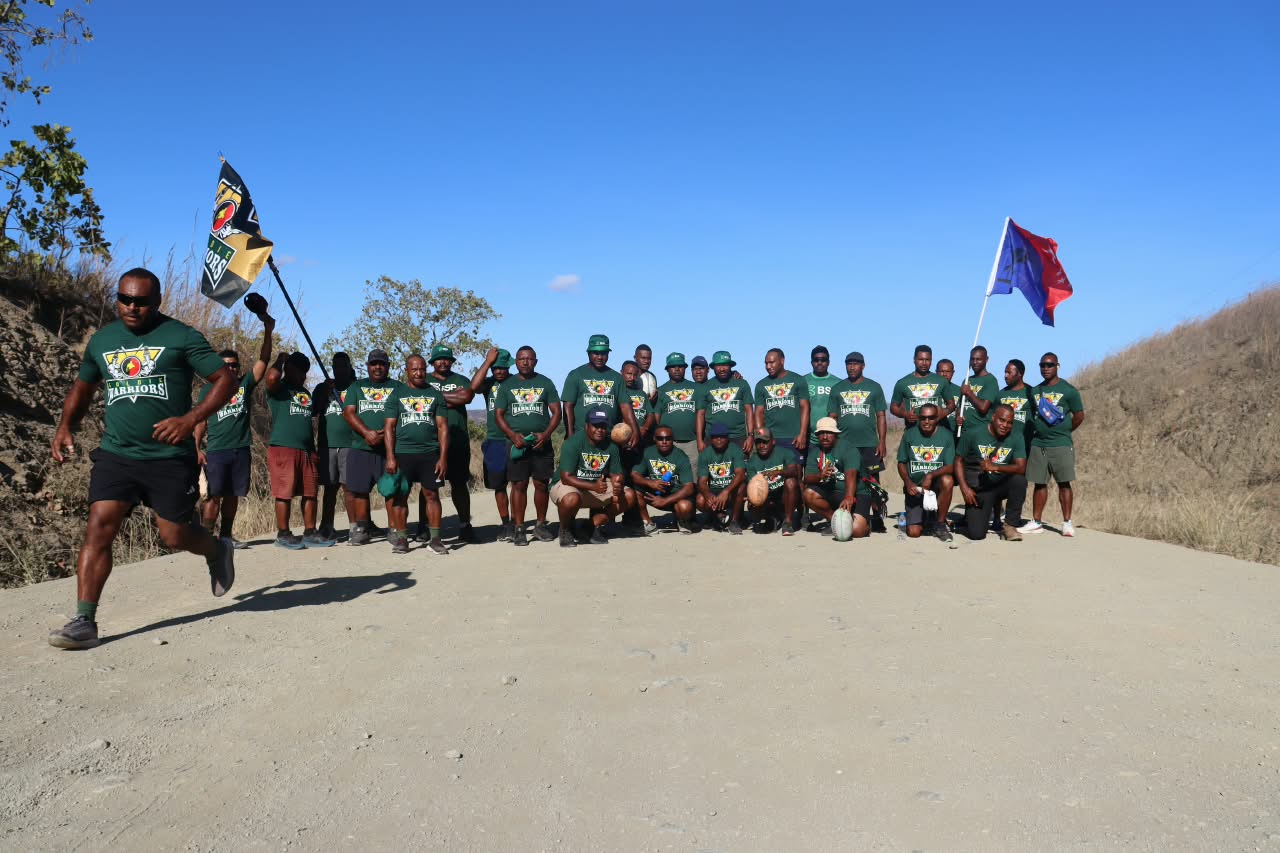
GOILALA RUGBY 9S TOURNAMENT TO CELEBRATE PEOPLE'S SPORTING CULTURE
The spirit of rugby league is set to thrive once again in Goilala with the launch of the Goilala Rugby League 9s Tournament now officially open for registration.This year’s event aims to bring together local talent, ignite community pride and strengthen the sporting culture of the district.
The tournament is open only to players of Goilala heritage, providing a platform to nurture and showcase the region’s rich sporting talent.
With an entry fee of K500 per team, the competition offers K10,000 for the Cup winner and K5,000 for the runner-up.
Registrations will close on January 21st, 2026.
Tournament Chief Executive Officer (CEO) Steven Kauva Francis said the event is more than just a sporting competition, it’s about empowering the youth and building community spirit.
“The Goilala Rugby 9s Tournament is about giving our young people purpose, pride and opportunity,” Francis stated.
“We’re investing in the next generation of Goilala athletes, players who can one day represent not only their district but also the country. We want this tournament to be a pathway for them to shine.”
As one of the region’s most anticipated grassroots competitions, the Goilala Rugby League 9s will feature senior categories for both men and women with plans to include junior divisions from next year.
Rugby league 9s is a fast-paced variation of the traditional 13-a-side game, placing emphasis on speed, agility and skill, and offering an ideal platform for scouts and coaches to spot emerging talent.
Rugby league officials and selectors are expected to attend, making this an important event for aspiring players aiming to progress to higher levels of the sport.
Beyond the field, the tournament holds deeper significance for the Goilala community.
The event promotes youth empowerment, strengthens community unity and encourages healthy lifestyles, while also stimulating the local economy through small business involvement and tourism.
The tournament has already gained notable backing with Foreign Affairs Minister Justin Tkatchenko MP, committing K20,000 to support the event.
Organizers are also calling for further assistance from business houses and government offices across NCD and Central Province to help make the tournament a success.
“This is not just rugby, it’s community building,” Francis emphasized.
“We want families to come together, young people to stay active and focused and Goilala to be recognized for its passion, discipline, and potential.”
For interested teams or individuals, registration forms and contact details can be found on the Goilala Rugby League Facebook page or by reaching out directly through the organizers listed contacts.
The Goilala Rugby League 9s Tournament promises exciting competition alongside a celebration of Goilala’s unity, resilience and talent, laying the groundwork for even greater sporting success in the years ahead.
Published on January 12, 2026