

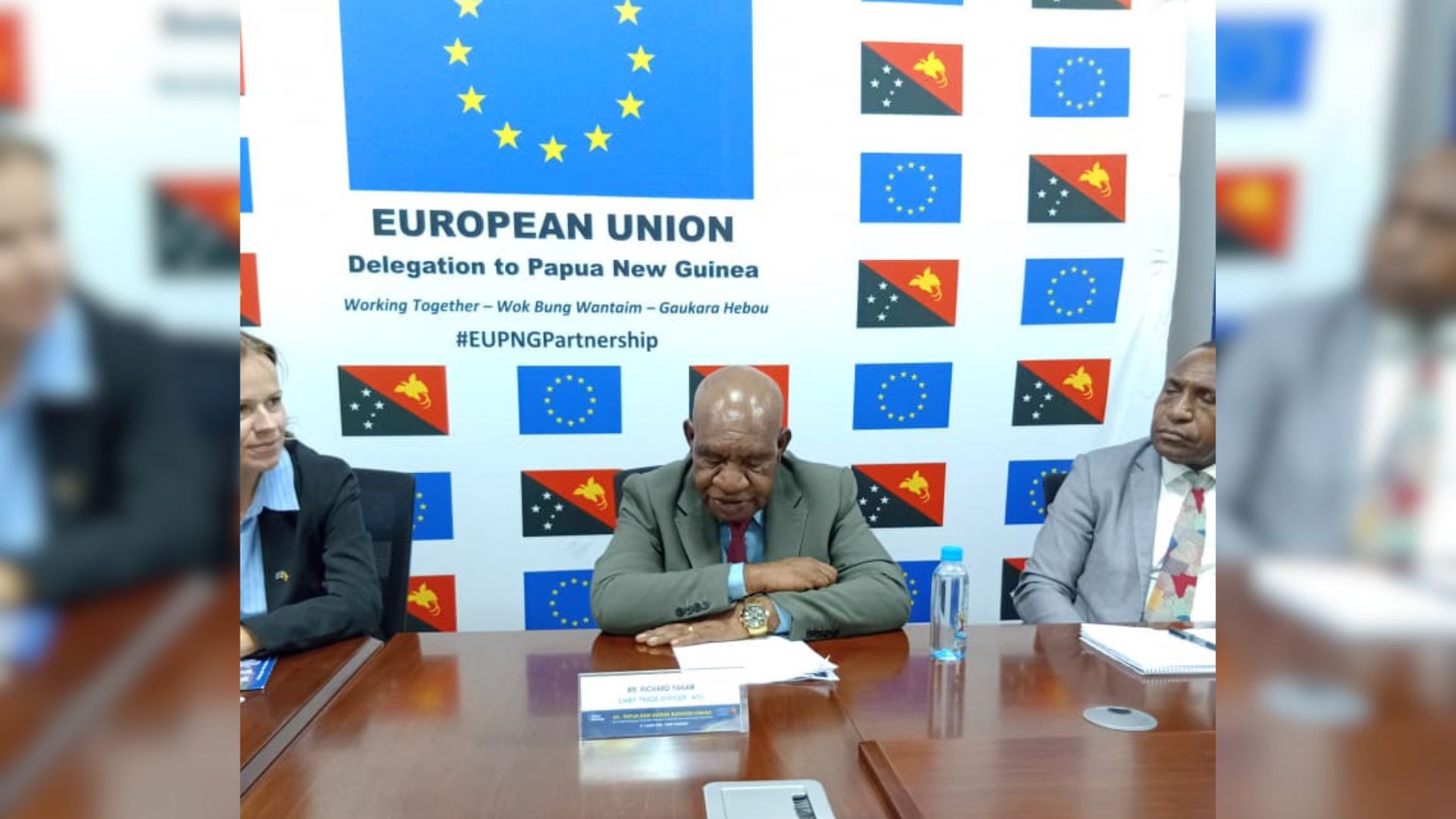
Papua New Guinea is looking to strengthen its agricultural exports to the European market as trade relations with the European Union continue to grow.
Speaking during a press conference ahead of the 5th European Union–Papua New Guinea Business Forum, Chief Trade Officer Mr. Richard Yakam said the forum comes at a critical time as countries continue to face global trade uncertainty, inflation, supply chain disruptions, and rising protectionism.
Mr. Yakam said maintaining transparent and predictable international trade systems remains important for Papua New Guinea’s economic growth.
He highlighted the success of Papua New Guinea’s fisheries exports under the Economic Partnership Agreement with the European Union, which has allowed PNG duty-free and quota-free access to the European market since 2011.
However, Mr. Yakam said more opportunities remain for agricultural products such as cocoa, coffee, vanilla, coconut and palm oil to expand into European markets.
“The EU market is huge, with over 450 million consumers who prefer sustainably produced products, which offer higher margins of profit for the private sector,” he said.
Mr. Yakam said agriculture, forestry and fisheries continue to play a major role in Papua New Guinea’s economy, contributing around 17 percent of GDP and employing nearly 80 percent of the rural population.
He said Papua New Guinea must also prepare for changing European Union regulations relating to deforestation-free products, traceability and sustainable production standards.
Mr. Yakam welcomed the business forum’s workshops and masterclasses, saying they would help exporters and government agencies improve technical understanding and market readiness.
He also acknowledged the continued support of the European Union through programmes aimed at strengthening value chains, improving market access and creating opportunities for small farmers and SMEs across Papua New Guinea.
Mr. Yakam said despite Papua New Guinea’s strong agricultural potential, challenges remain in logistics, post-harvest handling, certification systems, food safety compliance and trade finance.
He stressed the need for stronger collaboration between government, industry and development partners to ensure Papua New Guinea continues accessing premium international markets while promoting sustainable economic growth.