

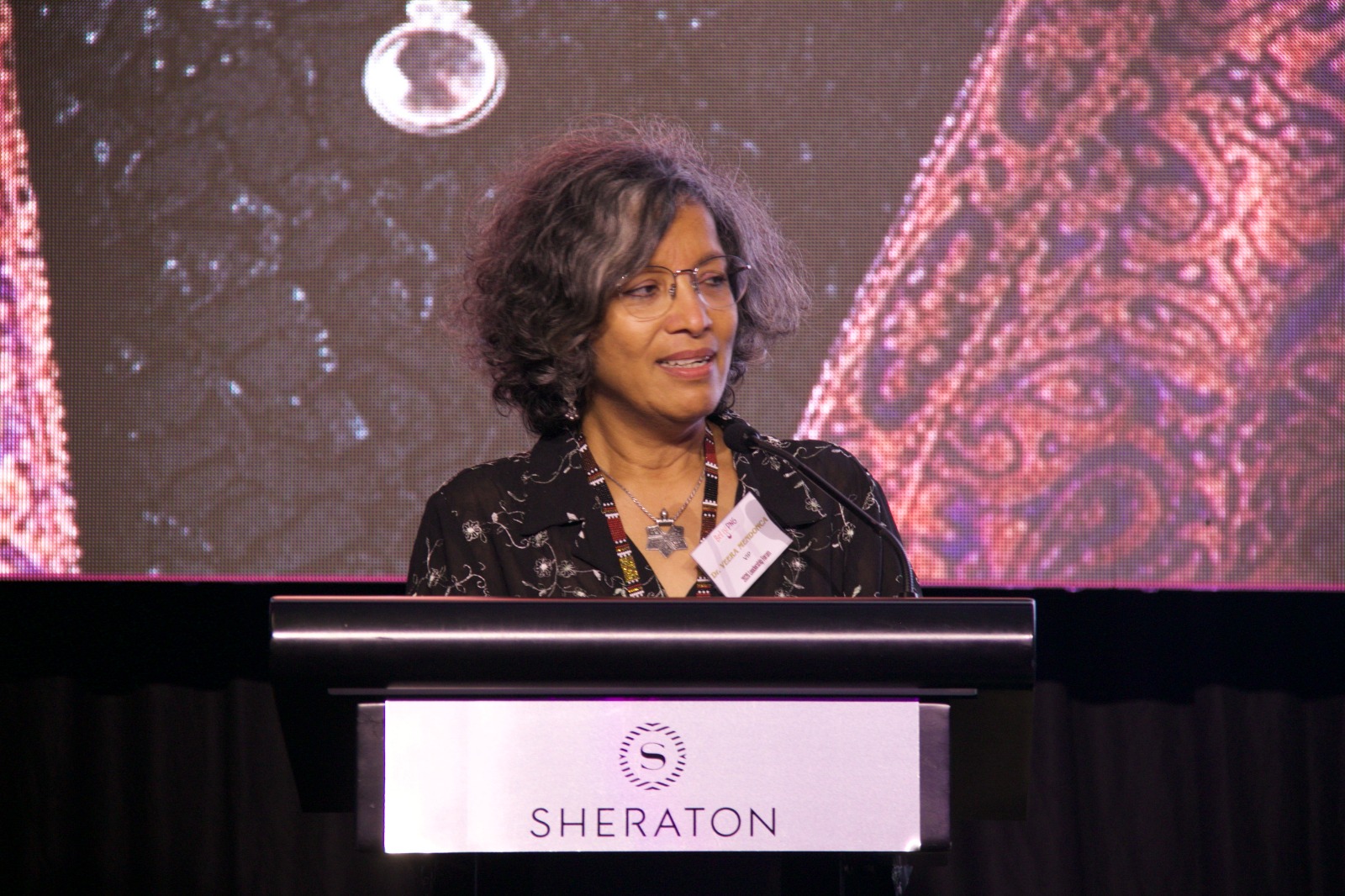
Peace in Papua New Guinea must go beyond the absence of conflict and be reflected in the everyday safety and dignity of women, children and families.
That was the message from UNICEF Papua New Guinea Representative Dr Veera Mendonca, speaking at the Bel Isi PNG Leadership Forum to mark the International Day of Peace.
Dr Mendonca said peace should be experienced by women who are safe in their homes, children who can learn safely, and employees who can speak up about violence or concerns without fear of stigma or retaliation.
She pointed to national data showing that more than 58 percent of ever-partnered women in Papua New Guinea have experienced physical or sexual violence by an intimate partner.
“Behind every statistic is a person, and so very often a family whose safety, dignity and futures have been diminished,” Dr Mendonca said.
She said children also carry the consequences of violence, with an estimated four in five children in PNG experiencing some form of violence during childhood.
According to Dr Mendonca, violence can disrupt children's education, damage their health, and increase the risk of violence being passed on to the next generation.
She also highlighted the economic impact of family and sexual violence, saying research involving private-sector companies in PNG found that violence costs almost 10 working days per employee each year.
Dr Mendonca said PNG already has important commitments and legal frameworks, including the Family Protection Act and national strategies, but stressed that policies must translate into services people can actually access.
“For me, as I travel across provinces, what I hear is policies have very little meaning for people, for survivors, especially in a remote district, if they cannot access healthcare, if they cannot have police protection, safe accommodation or a functioning referral pathway,” she said.
She pointed to partnerships between government, businesses and civil society as an example of how policy can be turned into practical support for survivors.
She said participating companies had recorded an average reduction of 1.4 days of work lost per employee, demonstrating that action to address violence can produce measurable results.
Dr Mendonca said the United Nations is also working with government and communities through peacebuilding initiatives in the Highlands and other parts of the country to prevent violence, address drivers of conflict and strengthen local capacity.
She said the lessons from Bougainville, the Highlands and Port Moresby are similar.
“Peace must be built deliberately, together,” she said.
Dr Mendonca said peace should ultimately begin in safe homes and workplaces and be sustained by institutions that deliver services and protection.
“Peace does not begin at the negotiating table. It begins in a safe home, a safe workplace, but what it is sustained by institutions that deliver,” she said.