

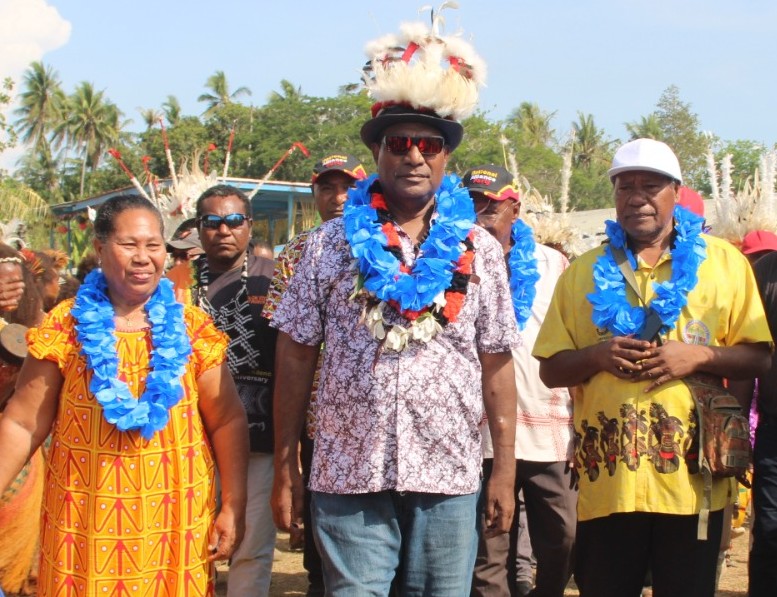
The Member (MP) for Kairuku and Minister for Energy, Peter Namea Isoaimo, has urged the chiefs, clan leaders and landowners of Gabadi village in Central province to organize themselves and turn their customary land into lasting economic opportunities.
Addressing the community recently, the MP rejected the idea that Gabadi was an unfortunate place, saying its people already possessed a valuable resource; that is their land.
“We are not unfortunate people. We are God-blessed people. We are just not thinking outside of the box,” he said.
Isoaimo encouraged leaders to take the initiative rather than wait for development to arrive. He called on clans to identify available land, organize their members, and prepare proposals that could attract credible investors. He said he regularly meets potential investors through his work and was willing to connect them with organized landowner groups.
At the same time, he stressed that customary ownership must be protected.
“Under my watch, no land gets transferred to any outsider. I have a duty to protect my people’s inheritance,” he said.
He urged landowners to carefully assess prospective investors before signing agreements, warning against people who make promises without the resources or intention to deliver. Any partnership, he said, should include clear terms and a fair share of the benefits for landowners.
Using the example of rice production, Isoaimo asked landowners to consider how revenue would be divided once crops were processed, packaged, and sold. Investors could contribute to capital, equipment, technology, and expertise, while landowners contributed to the land, he said. Both sides therefore needed to agree on a fair arrangement.
Isoaimo said his vision was for Gabadi to become a major agricultural and commercial production centre, with potential projects including large-scale rice farming, rice mills, tapioca processing, commercial cattle farming and related industries.
He also revealed that he had opposed proposals to establish an army barracks on Gabadi land, saying the community’s priority should be productive economic development.
“We want agriculture development, not army barracks,” he said.
The MP acknowledged ongoing customary landownership concerns involving areas from Gabadi’s 48 to Manumanu, including competing claims involving groups such as the Magas and Kopuanas. He called on those involved to meet, discuss their claims and seek common ground, warning that unresolved disputes could delay opportunities for the wider community.
He also referred to a proposed 40,000-hectare cattle ranch intended to benefit the Nara and Kairuku coastal people. The project has not advanced, he said, amid unresolved boundary disputes involving groups including Vanuamai, Poukama and Nikura.
Isoaimo also cautioned that continued disputes and failure to make productive use of customary land could put communities at risk of losing control of their inheritance.
“We need to utilize the land, or we’ll lose it all,” he said.
He cited communities around Laloki, where land had reportedly been sold cheaply, as a warning against short-term decisions that could leave future generations without land or meaningful economic prospects.
With improved road access creating new opportunities, Isoaimo said Gabadi needed to prepare to participate in the changing economy. He called on board members, chiefs and clan leaders to organize their communities and invited them to arrange village meetings, which he said he would attend to discuss development proposals.
He said successful land-based investment could help families meet education and healthcare costs, improve household livelihoods and support schools, health facilities and other community priorities.
“Everyone in Gabadi should be living a middle-class life because of the land you own,” he said.
Isoaimo emphasized that achieving this vision would require cooperation between elected leaders and customary landowners.
“Yes, I may be a member, but it is not my land. You own the land. I am your member. Let’s now learn to work together.”
His message to Gabadi was to protect customary land, resolve internal disputes, organize clans, and pursue investment that can create sustainable benefits for generations to come.