

Bringing essential services into remote, mountainous terrain requires sheer determination, and health delivery in East New Britain’s Pomio District is no exception.
As a vast, rugged administrative district comprising four Local Level Governments (LLGs); East Pomio, Melkoi, Sinivit, and West Pomio-Mamusi, most residents rely heavily on local aid posts for medical assistance.
Across the district, there are currently 50 aid posts, 12 health centres, and two hospitals, with healthcare remaining a core priority under the 2026-2036 10-year District Development Plan.
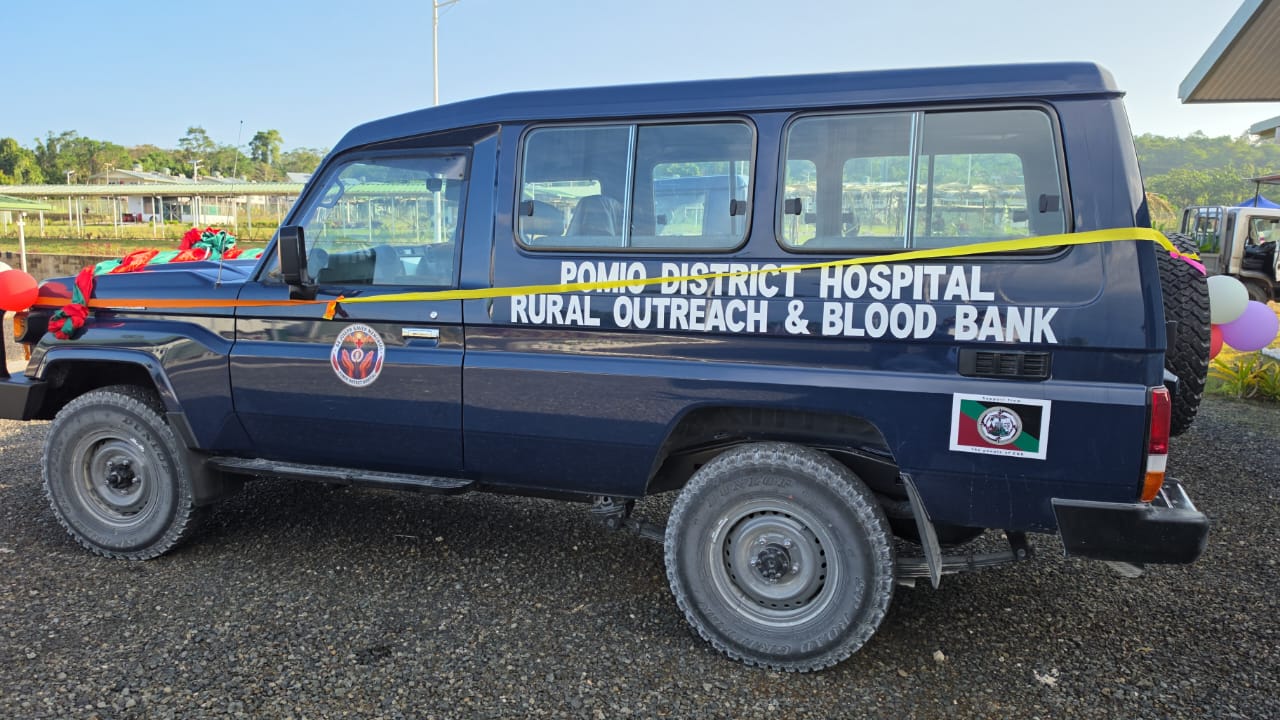
Speaking at the recent presentation of two new Land Cruisers to the Dr. Kaven Memorial Pomio District Hospital, Minister for Defence and local MP Elias Kapovore emphasized that the growing demand for healthcare must be met with impactful programs.
“In health, there is no excuse when we talk about health demand and impacting people’s lives by improving the quality, efficiency and utilization of essential health services,” Kapovore said.
The vehicles were sourced under the World Bank-financed Impact Health Project, which supports four Provincial Health Authorities (PHAs) across Papua New Guinea: East New Britain, Simbu, Central, and East Sepik.
Meanwhile, with the new fleet secured, East New Britain PHA Chief Executive Officer Dr. Ako Yap is committed to deploying Senior Medical Officers (SMOs) directly to the communities that need them most.
“Money is hard to find, and the vehicles will be used for the intended purposes where SMO will now be doing a lot of outreach services to those remote villages where people cannot access health facilities easily,” Dr. Yap said.
“We need such vehicles to reach the remotest parts.”
In addition to the World Bank project vehicles, the Pomio District Development Authority and the National Gaming Control Board have each donated a vehicle to the district hospital.
Further counter-funding assistance from the Chinese Embassy and the East New Britain PHA will also secure a new ambulance for the facility.
To ensure the new fleet is strictly protected and maintained for community service, Kapovore also challenged the health authority to enforce strict rules on the vehicles’ use.
“For the vehicles no alcohol must be consumed in the vehicles. Put No Alcohol Policy on every health vehicle,” he concluded.