

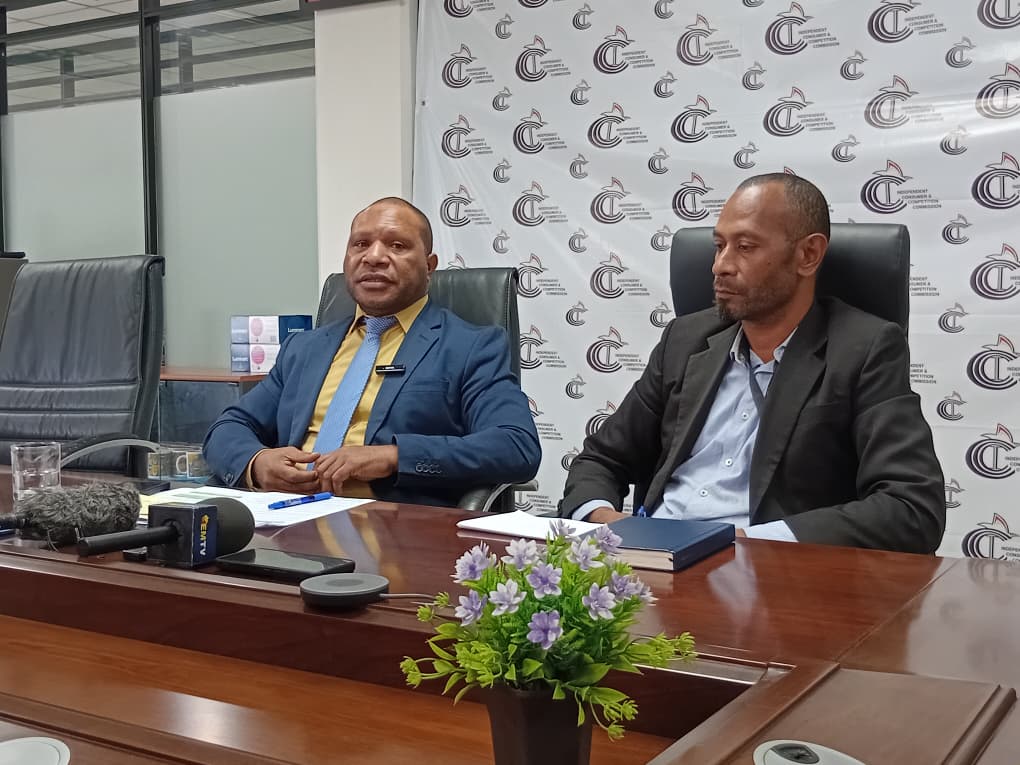
The Independent Consumer and Competition Commission (ICCC) has clarified its role in regulating fuel prices in Papua New Guinea while commending the Government for its continued fuel subsidy intervention aimed at easing the burden of rising global fuel prices on consumers.
Speaking during a media conference, ICCC Commissioner and Chief Executive Officer Roy Daggy said the Government’s fuel relief package has helped absorb the impact of increasing international fuel prices and maintain affordable domestic fuel prices.
Mr. Daggy said the subsidy mechanism introduced by the Government has been effective since April and May and is continuing into June, with plans for support to continue throughout the year.
“We, as the regulator, commend the Government because we stand between the businesses, the consumers and the Government, making sure that whatever fuel price that is passed through to the people is affordable and at a reasonable rate,” he said.
He explained that ICCC works closely with a high-level State taskforce team, Government agencies and fuel industry stakeholders to ensure the subsidy mechanism and related policies are properly implemented.
Mr. Daggy clarified that while ICCC has regulatory powers under the ICCC Act and the Price Regulation Act to regulate retail fuel pricing, the fuel subsidy itself remains a Government fiscal intervention.
“ICCC does not make policy decisions, amend legislations or determine Government policy. We assess the market and provide advice and guidance to the Government on relevant fiscal and legislative measures,” he said.
He said fuel prices are calculated monthly using verified market information including international fuel prices, shipping costs, exchange rate movements, domestic freight margins, taxes and Government subsidies.
Mr. Daggy said ICCC directly regulates the retail margins for petrol, diesel and kerosene to ensure suppliers are fairly compensated while protecting consumers from excessive prices.
He added that ICCC only regulates retail fuel prices and margins and does not regulate prices for aviation fuel, pre-mix fuel, fuel sold in drums or fuel supplied directly to commercial industries such as mining, agriculture and manufacturing.
According to Mr. Daggy, global fuel price increases have significantly affected domestic fuel prices, but the Government subsidy has prevented consumers from paying the full market cost.
He said diesel prices in Port Moresby increased from around K7.69 per litre in April to approximately K8.35 in May under actual market pricing.
However, due to Government subsidies, consumers continue to pay the March subsidised prices of around K4.39 per litre for petrol, K4.44 for diesel and K4.49 for kerosene in Port Moresby.
Mr. Daggy said the K1 billion subsidy package has already been partially disbursed by the Government, with further disbursements continuing through Government processes.
He acknowledged the Government’s efforts in ensuring the subsidy mechanism remains operational and sustainable.
“We continue to commend the Government for intervening on behalf of the people by directly subsidising and absorbing the costs so that people can continue paying at the March price levels,” he said.
Mr. Daggy said ICCC will continue working with relevant agencies to monitor the implementation of the subsidy program and ensure regulated fuel prices remain fair and compliant across the country.