

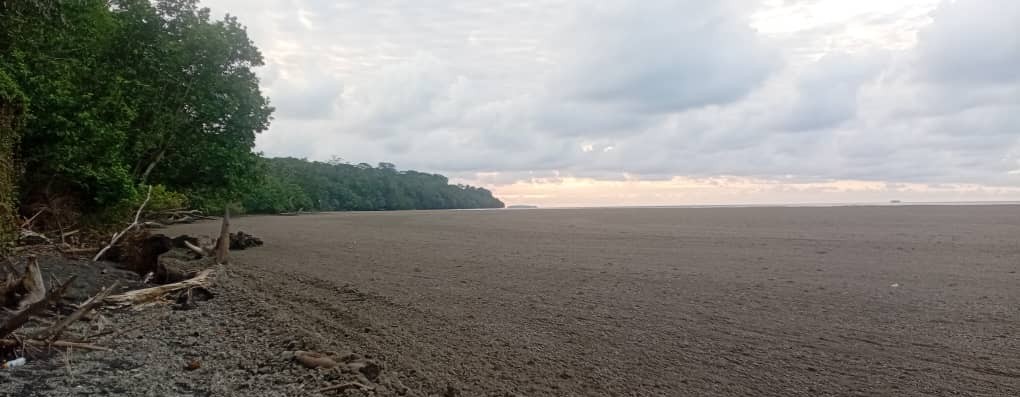
A coastal village in the Balopa Local Level Government (LLG) area of Lorengau district in Manus province, has been left isolated and facing a humanitarian crisis after massive volcanic pumice covered its shores, making it impossible for the people to travel by sea since Wednesday, June 03rd.
This situation is the direct result of a recent underwater volcanic eruption that occurred in the Bismarck Sea causing large sums of floating rocks out into the sea.
Volcanic pumice is a highly porous, lightweight volcanic rock formed from gas-rich, rapidly cooled magma during explosive eruptions.
For the residents of Baon village, the physical appearance of this eruption has effectively brought daily life to a complete standstill, locking down their main transportation and cutting off vital lifelines.
The amount of pumice along the Baon shoreline has reached a thickness of approximately 2.5 meters, extending outward into the sea with a radius of 40 to 50 meters.
This barrier has trapped local watercraft, leaving the community entirely landlocked.
Communications have also broken down severely, drastically complicating efforts to coordinate relief or relay messages to authorities from the affected area.
A community member of Baon village Mr. Simion Siwer, told PNG HAUSBUNG that since Wednesday, the people have been unable to travel with a dingy out to sea and back.
“We are just stuck on land, and communication is also a major problem. On the shores, the water is filled with thick pumice that covers the sea starting from the shores out to a radius of 40 to 50 meters.”
For the people of Baon, the inability to launch their dinghies hits at the very core of their survival.
Maritime travel is a daily necessity, and this causes a huge challenge for residents attempting to access health care, secure store goods, and engage in commerce.
With the coastal waters completely obstructed, the community is facing an immediate crisis regarding medical emergencies and essential travel to town.
Beyond the transport lockdown, the volcanic debris has affected the local economy as well as nutritional security.
The village relies heavily on fishing as its primary source of food, financial income, and market trading.
Because no rightful authorities have yet arrived to inspect the water quality or sample the marine life, villagers are terrified to fish near their own reefs, uncertain if the sea or the fish stocks have been dangerously contaminated by toxic volcanic elements.
“Since dinghies are our main transport and traveling by sea is our daily travel, seeking medical care or travelling to town is going to be a huge challenge for us.”
“In terms of fishing, we cannot travel by canoe or even hook because we do not know if the sea or the fishes are infected because a team has not yet come to assess the situation.”
To secure protein and keep families fed, the villagers are forced to trek over land to neighboring areas such as Solang ward.
Located within the same LLG but situated roughly two to three kilometers away, Solang remains uninfected by the pumice drifts, allowing for safe line and canoe fishing.
However, transporting fish back to Baon over land adds physical labour to a community already under immense strain.
The financial burden worsens each day since being affected by the volcanic pumice. Normally, the sale of garden produce in the Lorengau town market provides the cash necessary to purchase the protein and other necessary household good they need.
Now, to get crops to market, farmers must carry their garden produce all the way to Solang ward, negotiate with local residents, or hire boats at a high cost to get their produce to town to sell and back which adds more restraints.
“We survive on fish for food, marketing, and income,” Mr. Siwer emphasized.
“Since we are stranded, cannot travel into town to sell our garden produce and receive cash to at least buy ourselves protein, we have to carry our garden produce all the way to Solang.
“We have to negotiate with them or hire a boat to bring those produce to town and then return, which all costs money.”
On behalf of the community, Mr. Siwer has issued an urgent public appeal to provincial disaster management authorities and rightful national leaders for immediate intervention.
While garden staples remain available for the time being, the community’s nutritional balance is affected without access to marine protein or affordable market routes.
In addition, the community is also calling for immediate logistics and transport assistance to handle medical emergencies, alongside direct food and protein relief.
The people of Baon have stressed that until an assessment team officially arrives to clear the water or declare the local fish safe for consumption, they will continue to face these daily challenges, hoping to receive assistance soon.
