

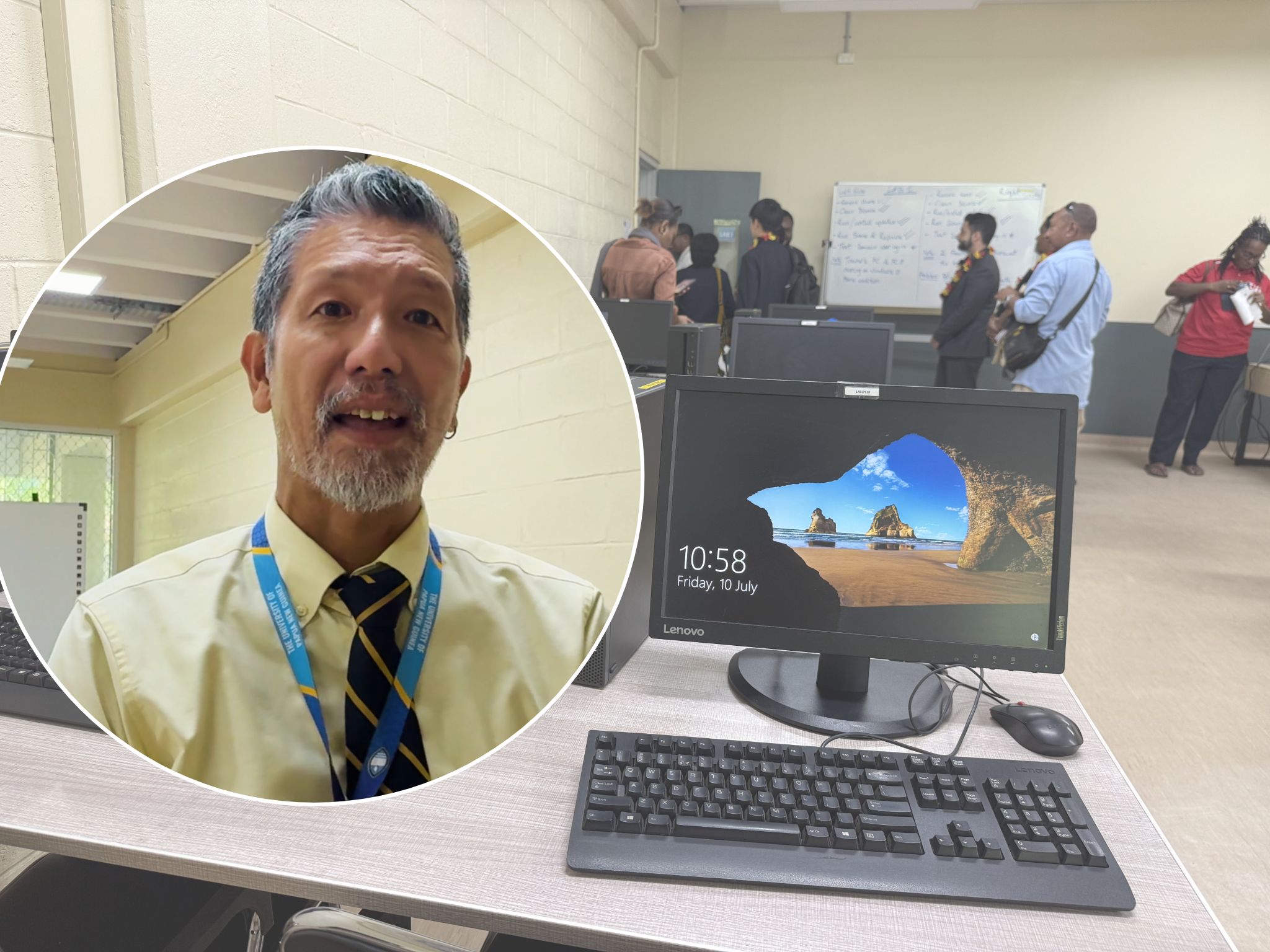
The University of Papua New Guinea's (UPNG) relaunched Centre of Excellence in Information Technology (CEIT) will commence its first intake of students on July 20, with three new certificate programmes aimed at preparing Papua New Guineans for careers in the country's growing digital economy.
UPNG’s ICT Director and Coordinator of the Centre of Excellence in Information Technology, Russell Harada, said orientation and classes would begin in two weeks following the relaunch of the facility.
The centre will initially offer Certificate programmes in Information Technology, Database Management and Cybersecurity, each running for one semester, or 15 weeks, from late July to October.
"We expect each programme to enroll between 20 and 30 students," Harada said.
"At the moment, we have received around 150 applications. We are currently screening them and gradually sending out acceptance letters so students can begin the registration process."
Harada said the programmes had been developed under a "Workforce Ready" approach, with a strong emphasis on practical, industry-focused training to meet the needs of employers.
"We need to work closely with industry partners—not only telecommunications and ICT companies, but also government agencies and private sector organisations," he said.
"We want to understand the type of skills employers need and then provide graduates who are ready for those jobs. We see ourselves as a factory for developing Papua New Guinea's digital workforce."
Unlike the centre's earlier operations, which were supported by academics from India, Harada said the new programmes would be delivered primarily by qualified Papua New Guinean lecturers.
"I'm originally from Japan, but this programme is being organised and delivered by PNG academics, both full-time and visiting lecturers, who understand the country's challenges," he said.
He added that the university would also invite visiting lecturers from Australia, the United States, China, South Korea and Japan to provide specialist expertise.
Harada said advances in artificial intelligence had made international collaboration easier by reducing language barriers through real-time translation technologies.
He also noted that the centre was considering using Tok Pisin in classrooms where appropriate to improve student understanding, while maintaining a strong focus on practical learning.
"The important thing is not theory. The important thing is practical skills," he said.
The centre currently has two full-time trainers, two assistant trainers and three to four teaching assistants, many of whom are UPNG students.
Harada encouraged young Papua New Guineans interested in technology to take advantage of the new opportunities offered by the centre.
"This Workforce Ready programme is a very new academic initiative at UPNG, and I look forward to welcoming smart, energetic young people who want to build careers in information technology," he said.