

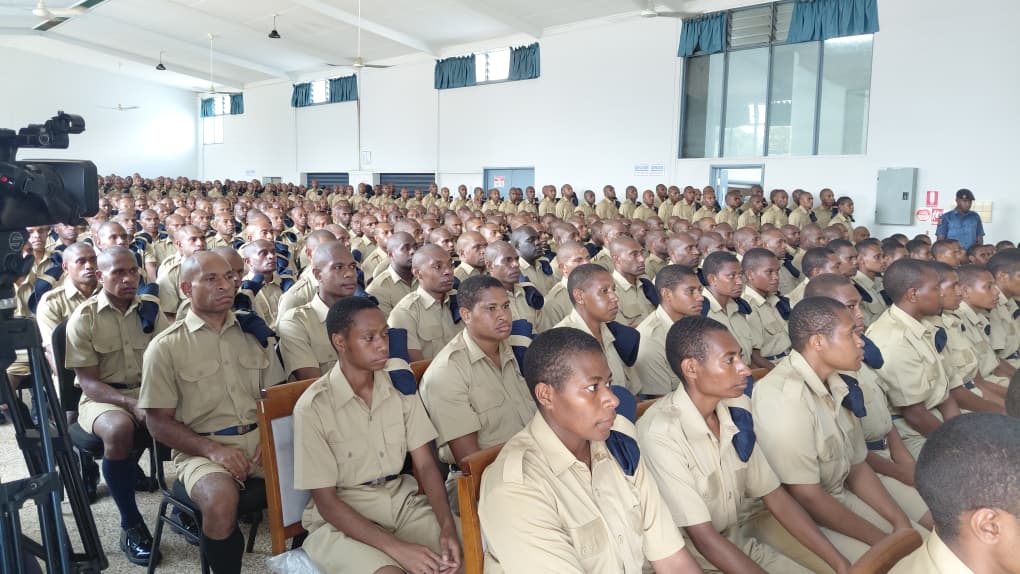
Training for the largest recruit intake in the history of the Royal Papua New Guinea Constabulary officially commenced today, May 18, at the Bomana National Centre of Excellence (NCOE).
A total of 662 recruits began their six-month training program during an official opening parade held at 10 a.m. The intake comprises 583 male and 79 female recruits.
The final cohort was reduced from the original 715 selected candidates following medical screenings and compliance checks. This followed a massive nationwide recruitment drive that drew more than 28,000 applications from the Highlands, New Guinea Islands, Gulf, and Central regions, as well as the National Capital District.
Deputy Commissioner of Administration, Dr. Philip Mitna officially opened the program, addressing recruits, training staff, and invited guests. Speaking during the parade, Dr. Mitna congratulated the recruits on navigating the rigorous selection process.
“For your records, you’ve done the hard yards. You are 50 percent home. The next phase now is undergoing training for the next six months,” he said.
Dr. Mitna noted that the recruitment process was conducted online to ensure fairness and transparency.
“Twenty-eight thousand-plus applicants applied to be part of this process across the country. Seven hundred and fifteen passed the process and were selected for training,” he said, adding that the final number was adjusted following the final screenings.
He emphasized that the constabulary maintains strict standards, warning recruits that discipline is non-negotiable.
“We have no tolerance for indiscipline in this organization,” Dr. Mitna said. “What takes you home is your self-discipline. That must be inbuilt in your DNA.”
Dr. Mitna explained that the historic intake aligns with the Government’s target to boost police manpower to more than 10,000 personnel nationwide by 2030.
“We cannot police this country with the current numbers,” he said. “That’s why our executive priority is to increase the numbers, but at the same time, we are mindful of quality.”
Also present at the parade were Acting Assistant Commissioner of Police for Training and NCOE Commandant, Silva Sika, senior constabulary officers, and representatives from partner agencies.
Sika urged the recruits to meet their training requirements with honesty as they prepare for the responsibilities of policing.
“We are not only training you but preparing you to become leaders so that our streets, communities, and neighborhoods are kept safe,” Sika said.
He noted that the six-month curriculum balances academic and practical components, including intensive physical conditioning.
“There is no distinction between male and female recruits. You will all participate in the same activities together, and we will not compromise the training,” Sika warned.
He also urged the recruits to persevere, reminding them of the thousands of applicants who missed out on the opportunity.
“You are fortunate enough to be given this privilege and opportunity,” Sika said.
While acknowledging that the unprecedented intake presents operational challenges for the institution, Sika expressed confidence in the training administration's ability to manage the program.
“It is historic for us to deliver training to this massive number for the first time, so my appeal is for everyone to cooperate and participate so we can deliver this training together,” he said.
To accommodate the historic crowd, training structures at Bomana have been expanded from the usual six-to-eight squads up to 16 squads. The curriculum will cover recruit discipline, police procedures, operational duties, and core law enforcement responsibilities.
The current batch of recruits is expected to graduate later this year, subject to training schedules and operational requirements.
Meanwhile, Sika confirmed that discussions regarding funding support are ongoing. Additionally, upgraded digital training infrastructure, including Zoom-enabled classrooms, is expected to roll out soon to support the massive intake.