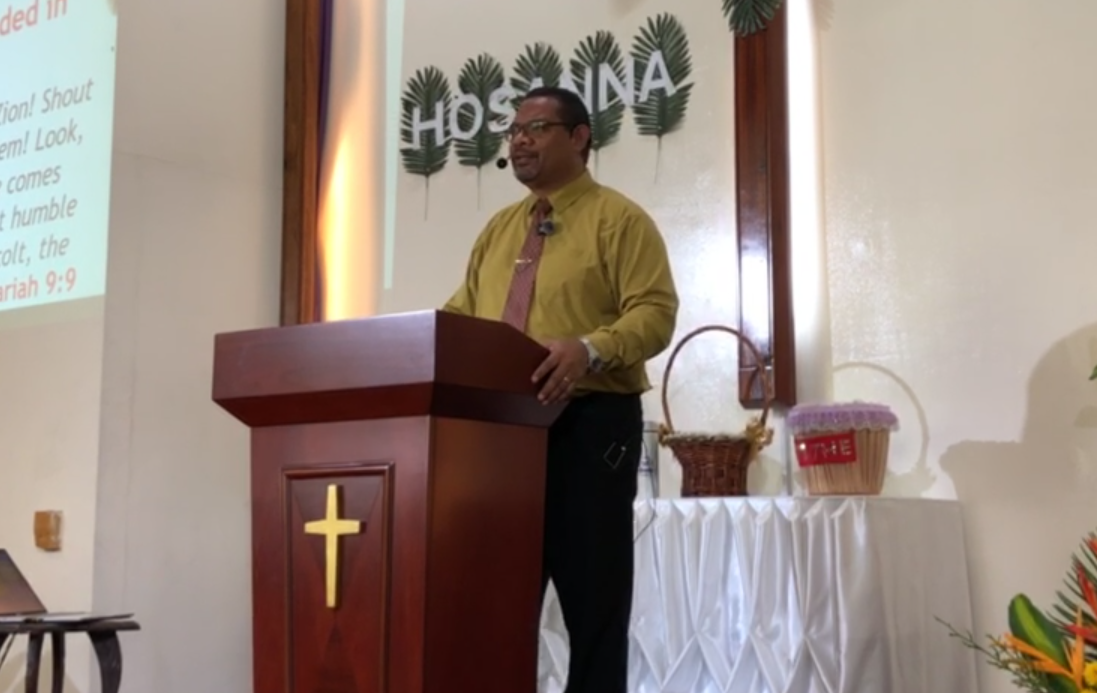
A Palm Sunday sermon at Tokarara Christian Fellowship (TCF) in Tokarara, Port Moresby, offered a unique perspective on the biblical account of Jesus Christ’s entry into Jerusalem, with Pastor Julian Kivori encouraging believers to reflect on lessons drawn from the humble donkey in the Gospel story.
Speaking to the congregation, Pastor Kivori revisited the events leading up to Palm Sunday by drawing from multiple Gospel accounts, including the Gospel of Matthew.
He noted that it was only after the resurrection that the disciples fully understood the significance of these events, recognizing Jesus as the Messiah.
Pastor Kivori invited the congregation to imagine themselves as first-century news reporters covering a major religious event, questioning who they would interview among the crowd—disciples, religious leaders, or even Jesus himself.
However, he shifted the focus to an often-overlooked figure in the story: the donkey.
Drawing from Matthew 21 and Gospel of Luke, he highlighted how Jesus instructed His disciples to bring both a donkey and its colt, emphasizing that one was experienced while the other had never been ridden.
This, he explained, illustrates that both experienced and inexperienced individuals have a place in God’s ministry.
“This shows that whether you are new in faith or have been serving for years, everyone has a role to play.”
He further connected the event to the prophecy in Book of Zechariah, which foretold a king arriving humbly on a donkey.
Pastor Kivori explained that while horses symbolized power and war, the donkey represented humility.
The sermon also emphasized unity and teamwork, drawing parallels between the two animals and the importance of working together in ministry.
Referencing Psalm 133, Pastor Kivori stressed that God values harmony among His people.
“Ministry is not about standing alone but about working together—experienced and inexperienced—just like the donkey and its colt.”
Pastor Kivori encouraged believers to remain grounded in Christ, citing Gospel of John, where Jesus describes Himself as the vine and His followers as branches.
He reminded the congregation that true purpose and fruitfulness come from staying connected to Christ.
He concluded by pointing to the example of John the Baptist, who declared that Christ must increase while he decreases, reinforcing the message that Christ should remain the centre of all service and ministry.