

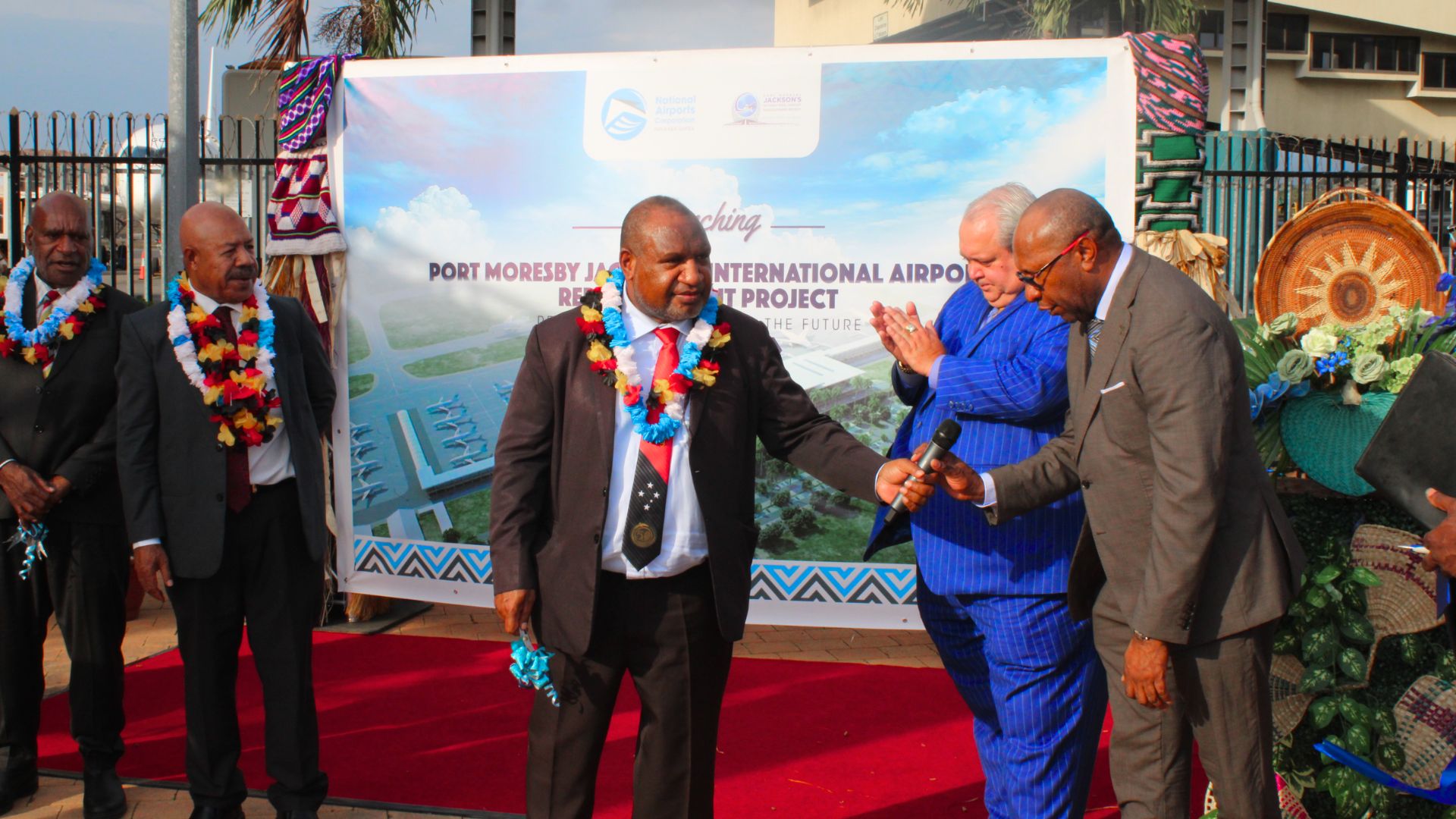
Port Moresby International Airport is set for a major transformation under a K2.5 billion redevelopment programs aimed at expanding capacity, improving passenger services, and positioning the country’s main aviation gateway for future growth.
The National Government, National Airports Corporation (NAC), and key aviation stakeholders officially launched the redevelopment program on Friday, June 5, marking one of the largest aviation infrastructure investments in the country's history.
The project will be delivered in four phases over six and a half years, beginning with the extension of the Domestic Terminal by 110 metres to ease congestion and address current operational challenges. Phase One will also include upgrades to airfield ground lighting and power supply systems.
According to NAC, growing passenger numbers are driving the need for expansion. Annual passenger movements through Port Moresby International Airport increased from 779,039 in 1997 to 1.68 million in 2025, with projections indicating traffic could reach 2.5 million passengers by 2035 and 3.7 million by 2045.
Phase Two will focus on redesigning and expanding the Domestic Terminal through the Civil Aviation Development Investment Program (CADIP III), including new check-in counters, aerobridges, baggage systems, VIP lounges, concession areas, and disability-accessible facilities.
Phase Three will deliver expanded apron facilities to accommodate Air Niugini’s incoming Airbus A220 and Boeing 737 fleet.
The final phase includes construction of a new international terminal featuring modern passenger processing technology, self-check-in facilities, upgraded security screening systems, expanded commercial space, and a runway extension from 2,750 metres to 3,500 metres. Cargo, maintenance, taxiway, and green-energy infrastructure are also planned under public-private partnership arrangements.
Civil Aviation Minister Wake Goi described the redevelopment as a long-term investment in the country's aviation future.
“Investing in areas that bring big returns is the way to go forward for the next 50 years,” Goi said.
He said the redevelopment would deliver significant improvements to both domestic and international airport infrastructure while creating opportunities for further private sector investment in the aviation sector.
Prime Minister James Marape, who attended the launch, said airports remain critical infrastructure for economic growth, trade, tourism, and national connectivity.
“Airport facilitates the economy, commerce and people movement in society,” Mara.pe said.
He commended NAC for prioritizing the domestic terminal expansion and announced government support for the first phase of the project.
“I want to say that government will put K20 million to support that expense, and I thank NAC for setting aside K5 million kina,” he said.
NAC said the redevelopment will strengthen readiness for APEC 2033, improve operational efficiency, enhance passenger experiences, and support long-term growth in aviation, tourism, and trade.
With feasibility studies and financing arrangements for the final phase expected to begin in 2027, the redevelopment is set to reshape the country's premier aviation gateway for decades to come.