
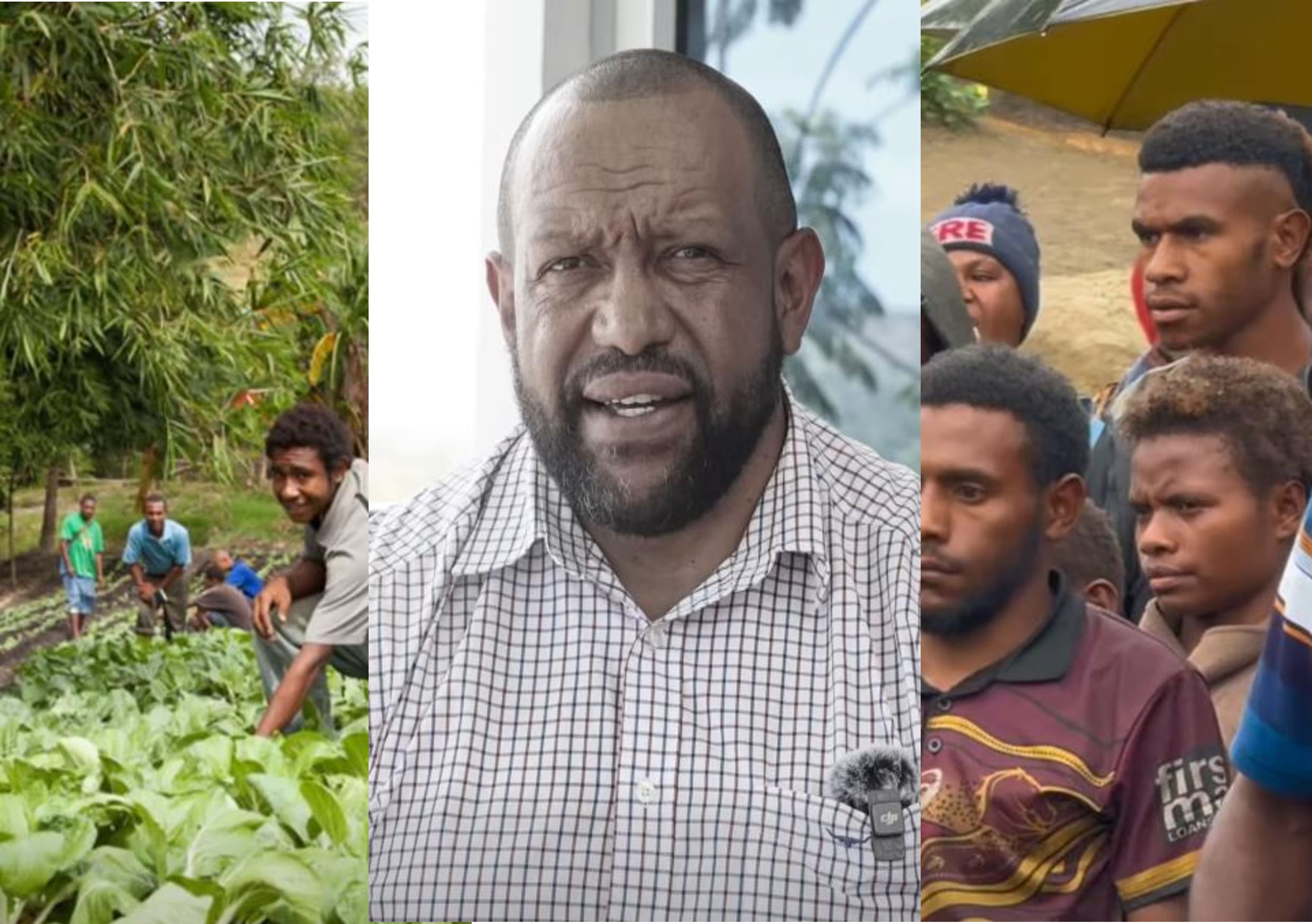
Opposition leader and Member for Chuave James Nomane has called on the Government to take immediate action to address what he’s describing as a growing governance crisis to capitalize on Papua New Guinea’s rapidly expanding youth population as a driver of economic development.
Nomane stressed what he termed the “paradox” of Papua New Guinea’s economic situation, noting that in spite the country’s vast natural wealth, a significant proportion of the population continues to live in poverty.
“Papua New Guinea is one of the most naturally endowed nations on earth, yet more than 40 percent of its people live below the poverty line.”
“We possess world-class reserves of gold, copper, and gas, and produce agricultural commodities such as coffee, cocoa, and vanilla that are highly sought after on international markets.
“Yet many communities still lack access to basic services.”
He argued that the situation is the result of years of poor governance rather than an unavoidable reality, citing challenges including deteriorating schools, shortages of medicines in hospitals, concerns over public safety, and inadequate access to clean water in many communities.
A major focus of the statement was the country’s youthful population.
With more than 60 percent of Papua New Guinea’s citizens under the age of 25 and approximately 100,000 young people entering the population each year, Minister Nomane warned that failing to create opportunities for young people could contribute to rising unemployment, social unrest, and instability.
However, it said the same demographic trend could become the country’s greatest economic advantage if properly managed.
“The youth bulge, properly channeled, is the single most powerful asset we have for rapid development.”
The Opposition emphasized the importance of strengthening agriculture as a pathway to economic transformation, arguing that improved productivity, land access, skills development, and stronger market connections could significantly increase rural incomes.
According to the statement, a 15 percent increase in agricultural productivity could generate an estimated K1.2 billion in annual farm-gate gains, while exports of commodities such as coffee, cocoa, and fresh produce could potentially double within the next decade.
The Opposition also criticized what it described as poor implementation of agricultural funding, claiming that less than 40 percent of sector allocations over the past five years had translated into measurable outcomes on the ground.
In addition, it called for a stronger focus on import replacement, noting that Papua New Guinea spends more than K800 million annually importing products such as rice, tinned fish, and other food items that could potentially be produced domestically.
The Opposition said reducing reliance on imports and increasing local production would help stimulate rural economies and keep more money circulating within the country.
As part of its recommendations, the Opposition urged the Government to immediately table a rural productivity action plan aligned with Vision 2050, subject the forthcoming Medium-Term Development Plan IV (MTDP IV) to an independent performance audit, and redirect capital savings toward agricultural extension services, rural road rehabilitation, and market-access infrastructure.
“The land is ready. The people are ready.”
“Now the Government must act to make the potential of our young people a reality for Papua New Guinea.”