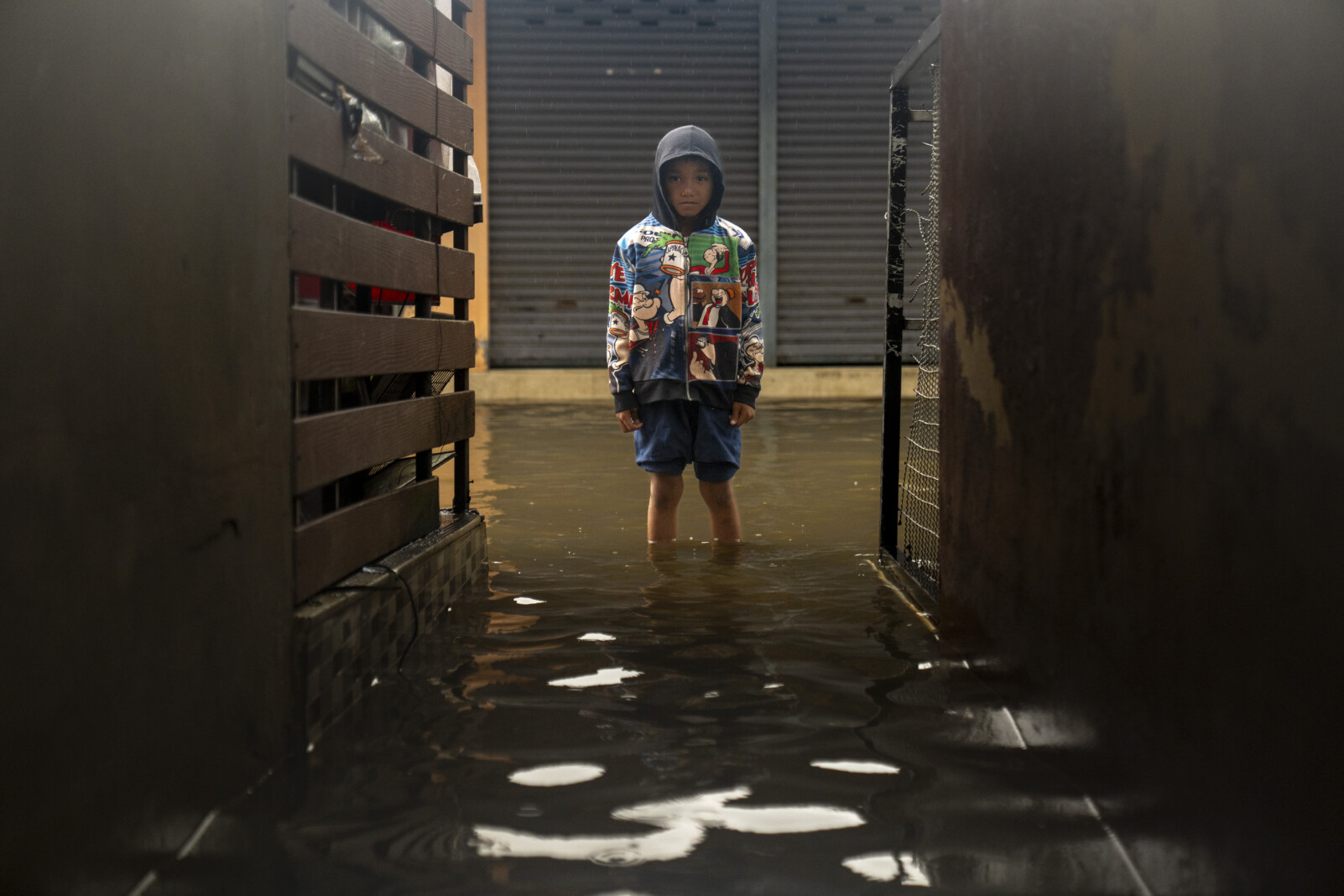
Climate change is placing millions of children across Papua New Guinea at increasing risk, with one in three children exposed to at least two overlapping climate hazards, according to a new report released by UNICEF.
The Children's Climate Risk Report (CCRR) 2026, launched on Monday, reveals that approximately 1.5 million children in Papua New Guinea are facing multiple climate-related threats, while more than 305,000 children are exposed to three overlapping hazards, significantly increasing their vulnerability to illness, food insecurity, displacement and interruptions to education.

The report paints a concerning picture of the growing impact of climate change on children's wellbeing, highlighting how environmental hazards are compounding existing challenges in health, nutrition, education and child protection.
According to the report, more than 2.6 million children are exposed to drought, while over 1.8 million face frequent and severe heatwaves. More than 600,000 children are vulnerable to tropical storms, nearly 200,000 are exposed to riverine flooding, and close to 150,000 are at risk from frequent fires.
Perhaps most alarming is the finding that almost four million children in Papua New Guinea are exposed to malaria, a climate-sensitive disease that remains one of the country's most significant public health threats.
UNICEF says Papua New Guinea's status as a Small Island Developing State, coupled with ongoing development challenges, leaves children particularly vulnerable to climate-related shocks.
"Climate change is not only an environmental challenge in Papua New Guinea. It is increasingly a health challenge, an education challenge, a nutrition challenge and, above all, a child rights challenge," said UNICEF Papua New Guinea Acting Representative Vikas Singh.
"Children are already living with the impacts of climate change, while many communities continue to struggle with poverty, malnutrition and limited access to essential services. Protecting children requires investing now in climate-resilient systems that can withstand future shocks and continue delivering the services they depend on."
The report highlights that climate change is worsening existing vulnerabilities. Less than half of Papua New Guinea's children receive routine immunisation, while one in four children experiences severe food poverty. Access to safe water, sanitation and hygiene services also remains limited in many communities.
UNICEF warns that climate-related disasters such as floods, droughts, storms and extreme heat can disrupt healthcare services, damage schools, contaminate water sources and reduce access to essential services, further exposing children to disease, malnutrition and interrupted learning.
To address these challenges, UNICEF is working alongside the Government of Papua New Guinea and development partners to strengthen climate resilience in sectors critical to children's wellbeing. These efforts include supporting climate-resilient health, nutrition, education, water and sanitation services, improving climate information systems and strengthening community preparedness for climate-related emergencies.
Among the initiatives currently being implemented are the Climate Action for the Last Mile programme and climate-resilient WASH projects funded by the Korea International Cooperation Agency (KOICA), as well as the Smarter, Safer Schools programme funded by the Australian Government, which aims to strengthen disaster preparedness in schools across six provinces.
UNICEF noted that Papua New Guinea has already made important progress in addressing climate risks, but said continued investment in climate-resilient services and child-focused adaptation measures will be essential to protect future generations.
The organisation says strengthening resilience today will help ensure children can continue to survive, learn and thrive despite the growing impacts of climate change.
Key Findings
Around 1.5 million children are exposed to at least two overlapping climate hazards.
More than 305,000 children face three overlapping climate hazards.
More than 2.6 million children are exposed to drought.
Over 1.8 million children are exposed to severe heatwaves.
More than 600,000 children are vulnerable to tropical storms.
Nearly 200,000 children face riverine flooding risks.
Close to 150,000 children are exposed to fires.
Almost four million children are exposed to malaria.
The report underscores the urgent need for climate action that prioritises children's health, safety and development as Papua New Guinea confronts the growing realities of a changing climate.