

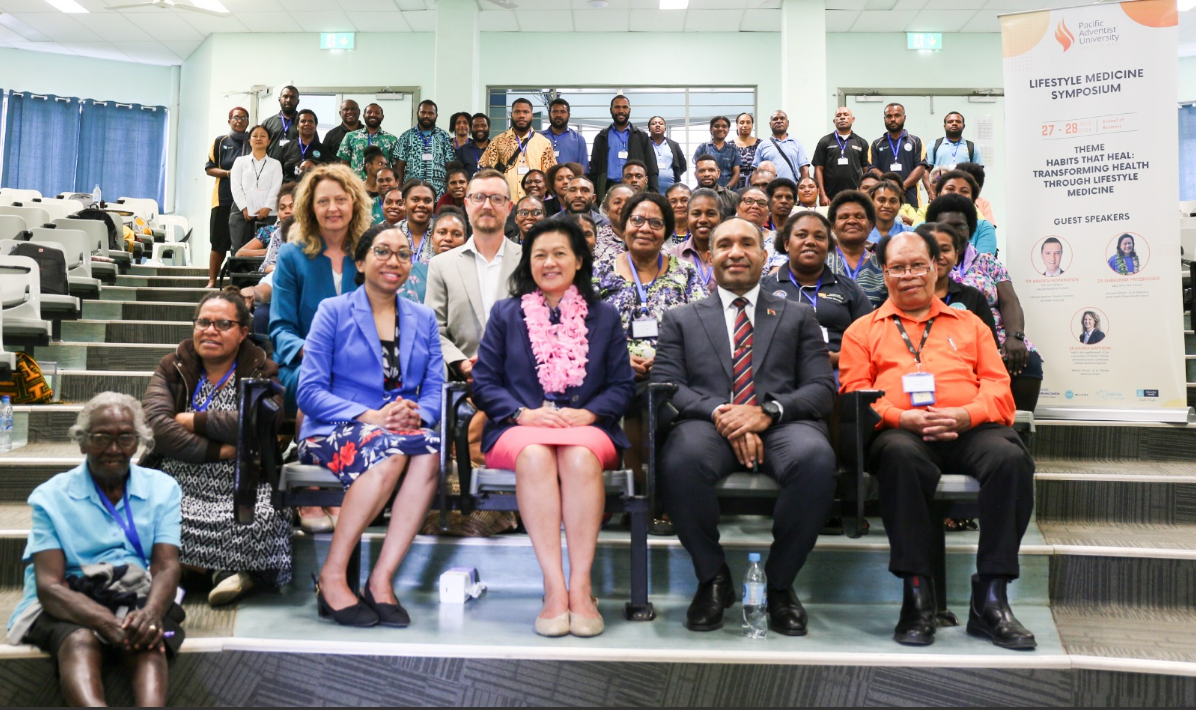
The National Capital District (NCD) Provincial Health Authority (PHA) is now promoting lifestyle medicine and stronger primary health care to address the rising burden of non-communicable diseases in Port Moresby.
NCDPHA Chief Executive Officer (CEO) Dr. Robin Oge made the call during the Lifestyle Medicine Symposium hosted by Pacific Adventist University under the theme, “Habits That Heal: Transforming Health Through Lifestyle Medicine.”
The symposium brought together health professionals and academics to highlight the role of nutrition, physical activity, stress management, and preventive care in reducing non-communicable diseases.
“Lifestyle medicine is a powerful tool in our fight against preventable diseases.”
He said promoting healthier habits and equipping communities with knowledge could improve health outcomes across Port Moresby and Papua New Guinea.
“This symposium is a timely reminder that prevention is not only possible but essential.”
Dr. Oge said NCDPHA was confronting what he described as a triple burden of disease in the Nation's Capital, including communicable diseases, non-communicable diseases, trauma, and injuries.
He said 830 tuberculosis cases were recorded in 2025, while diabetes, hypertension, cardiovascular disease, and other metabolic disorders were also increasing.
According to figures cited by Dr. Oge, about 8.5% of Papua New Guineans are living with diabetes, while nearly 30% of men and women had raised blood pressure, increasing their risk of stroke and heart disease.
He also said more than 1, 600 women die annually from cervical cancer nationwide.
To address cervical cancer, NCDPHA plans to launch an HPV vaccination program in September targeting girls aged 9 to 14.
Dr. Oge also highlighted rapid urbanization and changing lifestyles as factors affecting health outcomes in the city.
He said more than 50% of National Capital District residents live in settlements, where dietary changes from traditional and organic foods to processed foods which has contributed to poorer health outcomes.
NCDPHA is also working to address infrastructure, workforce, financial and data challenges through partnerships with academic institutions.
The authority has partnered with the University of New South Wales and the George Institute to strengthen health data and research.
NCDPHA’s plans include developing Moresby South District Hospital as a center for prevention and lifestyle medicine and recruiting 500 Village Health Assistants across the three districts.
In terms of recruitment, 30 Village Health Assistants have already been recruited and are serving communities.
The authority also plans to expand community awareness on healthy eating, physical activity and mental well-being, while strengthening health workers’ capacity in early screening, counselling, and treatment.
Furthermore, Dr. Oge emphasized that stronger partnerships with academic institutions and non-governmental organizations would also support research and new approaches to preventing and treating non-communicable diseases.
NCDPHA stated that strengthening lifestyle medicine and primary health care would support healthier communities across Port Moresby and the Motu Koita communities.