

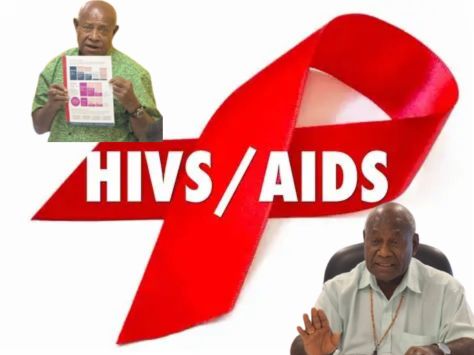
Cardinal Sir John Ribat and National AIDS Council Board Chairman Wep Kanawi have called for stronger leadership, increased investment and greater partnerships to address the HIV/AIDS challenge in the country.
The call comes as Papua New Guinea's HIV prevalence is estimated at 1.5%, with approximately 30 new HIV infections reported each day, including about seven babies born with HIV.
The figures highlight the continuing need for stronger prevention programs, increased access to testing and treatment, and greater community awareness to help reduce new infections.
Cardinal Sir John Ribat said the statistics should serve as a warning and a call for greater action from all sectors of society.
“The statistics tell a story,” Cardinal Ribat said, emphasising the need for collective efforts to reverse the trend.
He said addressing HIV could not be left to the Government alone, stressing the need for support from the private sector, businesses, development partners, churches and other organisations.
Cardinal Ribat said inadequate staffing and funding had affected the ability of organisations involved in HIV prevention to maintain effective programmes.
He said sustained investment in prevention was essential, particularly as HIV infections had continued to increase over the years.
The Cardinal also highlighted the importance of leadership and compassion in responding to HIV/AIDS, saying leaders needed to be more visible and personally involved in the national response.
He pointed to other countries where political leaders had taken a more prominent role in HIV programmes, using their positions to mobilise government agencies, the justice system and communities to support people living with HIV.
Cardinal Ribat said Papua New Guinea also needed leaders who were prepared to publicly champion HIV prevention and support efforts to reduce stigma and protect vulnerable communities.
He said churches were well placed to play an important role in the national HIV response because of their extensive presence throughout Papua New Guinea (PNG).
With churches reaching communities across the country, Cardinal Ribat said church leaders could help communicate HIV prevention messages to a large proportion of the population.
He also encouraged organisations involved in the HIV response to strengthen partnerships and explore new ways of mobilising resources, including possible crowdfunding initiatives.
National AIDS Council Board Chairman, Wep Kanawi said the changing global funding environment made it necessary for Papua New Guinea to find practical and sustainable ways to finance HIV prevention and treatment programmes.
He noted that international funding for HIV programmes had declined as resources were increasingly directed towards other global priorities.
“HIV/AIDS has been declared globally by the United Nations as everybody's business,” Kanawi said, stressing that the response required a whole-of-society approach.
He said countries themselves must take greater ownership of their HIV responses rather than relying heavily on international funding.
Kanawi also referred to a document developed following discussions with Cardinal Ribat, outlining key concerns surrounding the country's HIV response and proposed areas for follow-up action.
He said the document had been presented to the Cardinal so it could be circulated among relevant leaders and stakeholders.
The recommendations are also expected to be considered by the National AIDS Council, including through council submissions and programmes.
Kanawi said the message from Cardinal Ribat was clear: the National AIDS Council and its partners needed to take stronger action and address the HIV situation with urgency.
“Our people need you,” he said, describing the call as an important leadership challenge for those responsible for the national HIV response.
Both leaders stressed the importance of collaboration between government, churches, businesses, development partners, communities and other stakeholders in strengthening HIV prevention and response programmes.
They said Papua New Guinea must adopt a more practical and coordinated approach to ensure HIV prevention, testing and treatment services reach communities, particularly young people, pregnant women and other vulnerable groups.
With an estimated 30 new infections occurring each day, including seven babies born with HIV, the leaders said renewed action was needed to strengthen prevention efforts and protect future generations.