

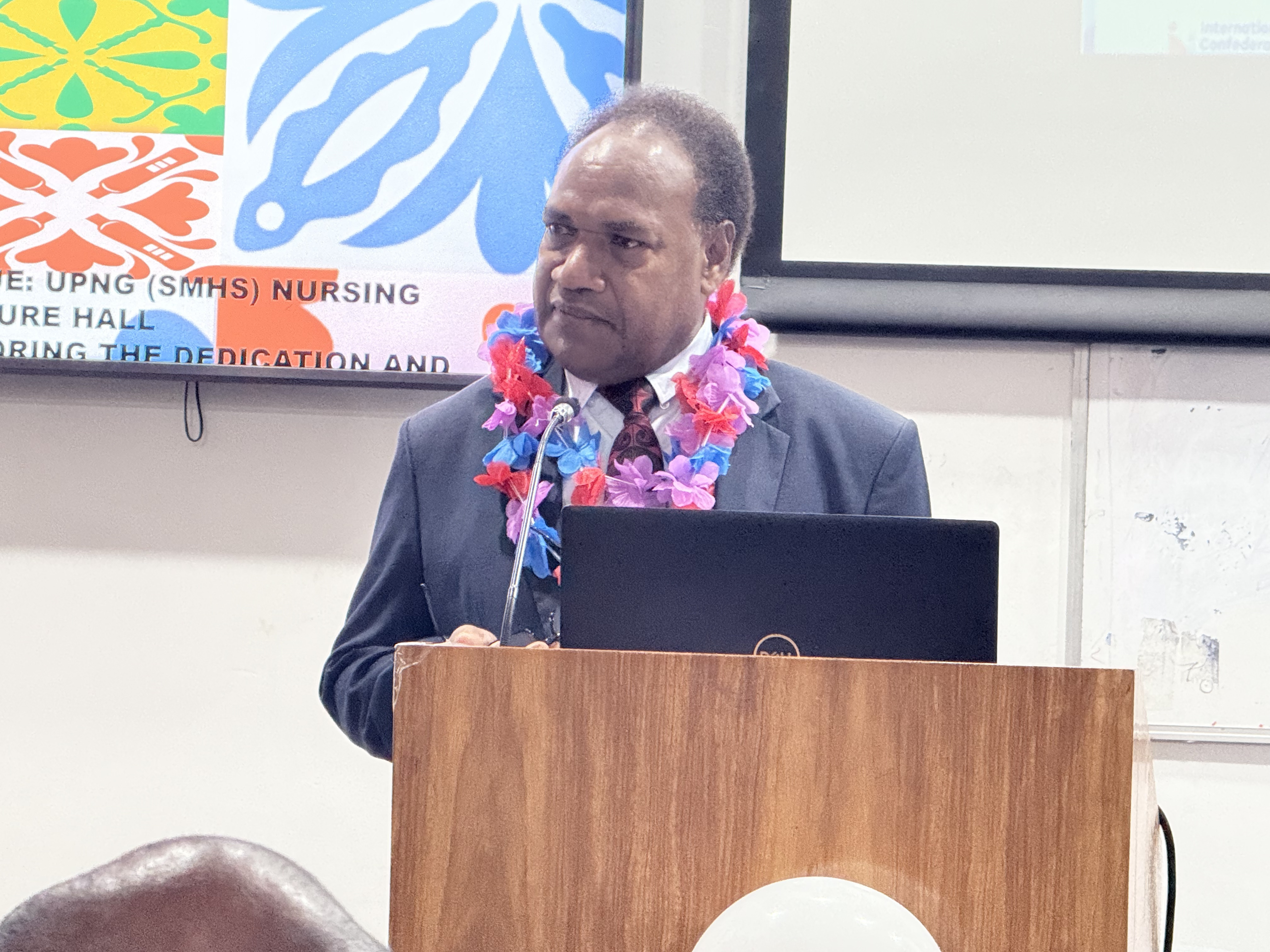
Papua New Guinea’s Health Secretary Pascoe Kase has underscored the urgent need to align health workforce training with the country’s most pressing challenges, particularly high maternal and child mortality rates.
Speaking during celebrations marking the International Day of the Midwife 2026, Mr. Kase stressed that future health policies and training programs must directly respond to the realities faced by communities across the country.
“One of the biggest challenges we face today—and in recent years—is the high rate of maternal mortality,” he said.
“Our policies and planning must focus on training health workers to respond effectively to these issues.”
Kase highlighted that preventable deaths among mothers and young children remain a critical concern, calling for a more targeted approach in developing the country’s health workforce.
“If young mothers and their babies are dying during childbirth or before the age of five, then our attention must shift toward preparing health workers who can manage exactly those situations,” he stated.
Drawing from recent discussions with government leaders, Mr. Kase said workforce development must be driven by evidence and national priorities rather than broad, generalized approaches.
“We should not take a one-size-fits-all approach. Our training must reflect the challenges we are facing as a country and ensure that resources are being used effectively,” he said.
Kase also emphasized the importance of strengthening specialized roles within the health sector, particularly midwives, who play a frontline role in maternal and newborn care.
“Midwives and frontline health workers are serving in some of the most difficult environments. Their work requires dedication and resilience, and they deserve recognition and proper support,” he said.
He further called for improved policies, better working conditions, and structured professional development pathways to support these essential workers.
The Health Secretary also acknowledged the contributions of international and local partners, including the United Nations Population Fund and UNICEF, for their continued collaboration with the NDoH and local health institutions.
Kase encouraged stakeholders attending the event to actively participate in discussions and contribute ideas that will help shape future strategies for improving maternal and child health outcomes.
“This is not just a day to celebrate progress, but a moment to reflect on what more needs to be done,” he said.
“We must ensure that women and children across PNG have access to quality healthcare services.”