Families in Paliama village in Wewak, East Sepik Province, are seeing significant changes in their daily lives as improved cocoa farming practices and stronger market access bring more stable incomes to rural households in Papua New Guinea’s Sepik region.
Under the Ramangs Cocoa Development Project, farmers who once relied heavily on early-morning trips to roadside markets are now increasingly able to depend on cocoa as a primary source of income.
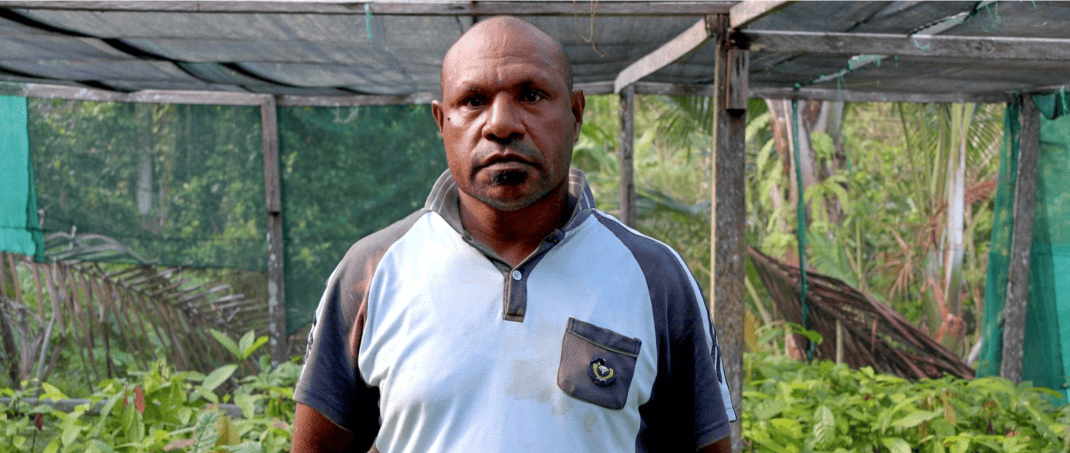
Jonathan Kriswa, lead farmer and director of the project, said the shift reflects a move away from informal farming toward a more organized, quality-focused system.
“The biggest change for us was moving from informal cocoa farming to a structured, quality-driven system. Our farmers now understand quality, work together, and sell with confidence to reliable markets,” he said.
The Ramangs group brings together 710 cocoa growers from 10 villages across inland Sepik, including foothill and island communities. In earlier years, farmers often sold wet cocoa beans to middlemen at low prices, with inconsistent fermentation and drying methods limiting both quality and income.
“Before, farmers dried cocoa directly on fire after fermentation. The result was poor quality beans, low prices, and no real market power,” Kriswa said.
Support from the EU-STREIT PNG Programme since 2021 has helped transform production practices through training, improved equipment, and better access to markets. Farmers have adopted improved fermentation and drying methods designed to meet buyer standards.
Kriswa, who was trained as a Trainer of Trainers under the programme, said knowledge-sharing has been key to sustaining improvements across the cooperative.
The group has also begun exporting directly to overseas buyers, including a recent shipment to New Caledonia and interest from buyers in Australia.
Overseas partners have reportedly noted improvements in bean quality, including better uniformity and moisture control.
According to Kriswa, the cooperative’s cash flow has now reached PGK 263,000, marking a significant increase compared to previous years.
Beyond income growth, the impact is being felt at the household level. Families are now better able to pay school fees, access healthcare, and invest in housing improvements such as permanent structures with corrugated iron roofing.
“Mothers no longer have to rely mainly on carrying garden produce to the highway at 4 am to earn cash,” Kriswa said.
Women farmers have also reported positive changes, with some saving a portion of cocoa earnings to build permanent homes and support household needs.
The project is also investing in youth participation and leadership, ensuring younger farmers are trained in cocoa management and production techniques.
From a once loosely organized farming system, Ramangs has developed into a coordinated cooperative focused on quality production and direct market access.
For many families, the change is simple but significant: mornings no longer begin at 4 am just to make ends meet.