

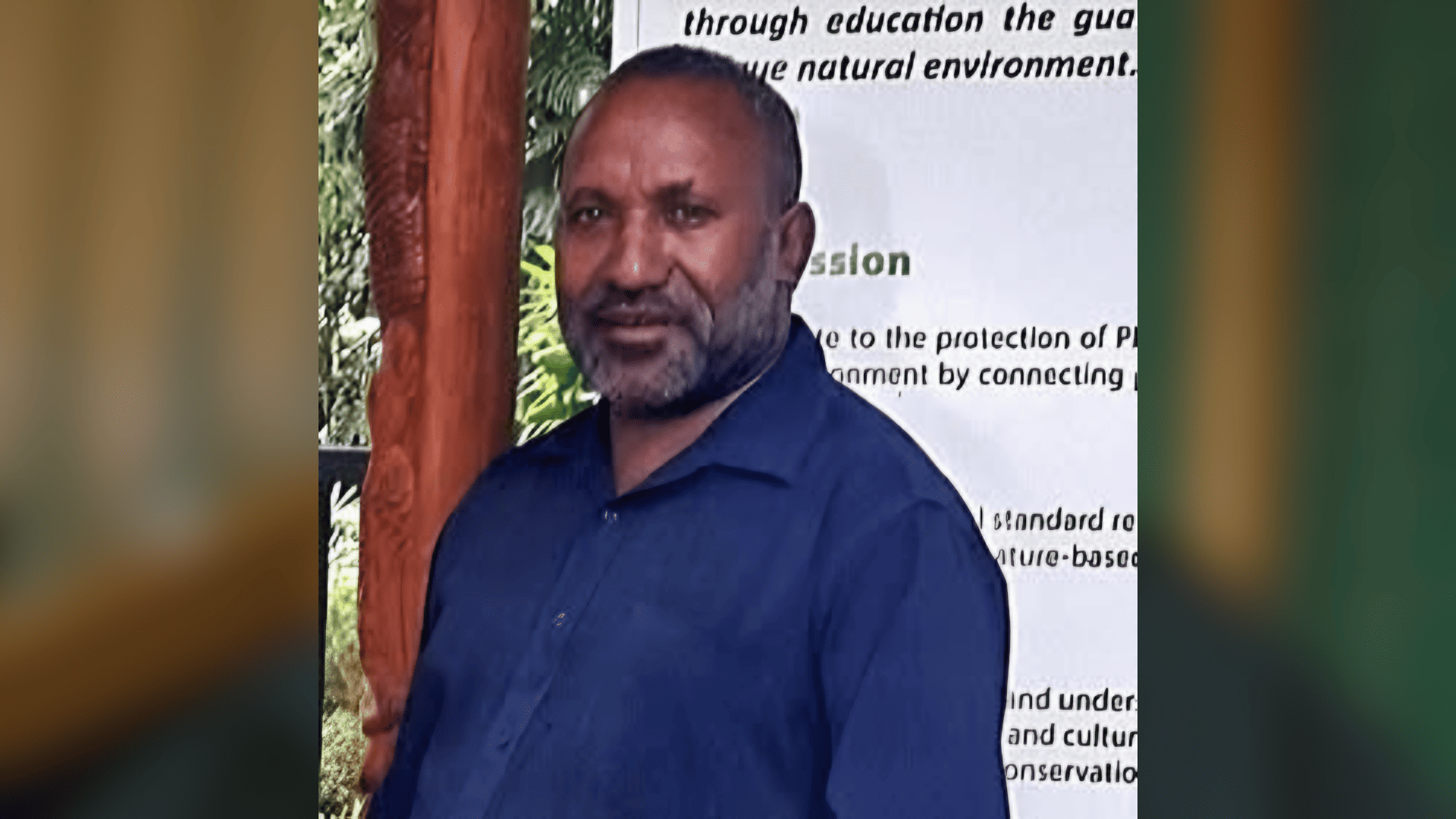
Former Royal Papua New Guinea Constabulary sergeant William Hoiba has welcomed Hela’s ongoing firearms surrender program, while calling for public disclosure of how the weapons are being stored, recorded and ultimately destroyed.
Hoiba, who now lives in Central Province, credited Governor Philip Undialu with encouraging the surrender of firearms as part of efforts to restore peace. But he said the program needed stronger safeguards to ensure surrendered weapons could not return to circulation.
“I support the firearms surrender program. But accountability for the recovered firearms must be ensured. They must be disposed of or destroyed where the public can witness it. I don’t trust anyone to keep those surrendered firearms unless they are destroyed in public,” Hoiba said.
In correspondence to the governor and his chief of staff, Hoiba sought answers on six issues: where the firearms are being held; who is responsible for their custody; how they are being inventoried; the proposed timeline and process for destruction; and what independent oversight will be provided.
He called for the provincial government to identify the armory holding the weapons and the officer responsible, and to confirm that secure storage is in place.
He also proposed that every firearm be tagged and photographed, with its details entered in a surrender register countersigned by the person handing it in, a police officer and a ward member.
Hoiba wants the inventory independently checked before destruction, with church, women’s and youth representatives involved. He also urged authorities to publish the criteria for any rewards or amnesty certificates and give communities advance notice of verification.
He cited provisions of the Firearms Act 1977 and the National Policy on Small Arms and Light Weapons 2005 in support of his calls. His interpretation of those laws and policies has not been independently verified for this article.
Hoiba said Hela had endured years of violence involving illegal firearms and argued that surrender alone would not deliver lasting peace. He called for alleged arms trafficking to be investigated and for rehabilitation support for young people affected by tribal conflict.
“People must see with their own eyes that the guns that killed their brothers are no more,” he said. “Keeping them in an unknown container or house breeds distrust and fear that they will reappear in the next tribal fight.”
Hoiba has given the Governor’s Office 14 days to respond with proposed dates and locations for public destruction in Tari, Koroba and Komo. If there is no response, he said, he may refer the matter to the Commissioner of Police, the Minister for Police, the Ombudsman Commission and the National Court.
The surrender program is reported to be underway in parts of Hela, including Tari, Hulia, Koroba and Komo. The provincial government has not announced a public destruction date.