

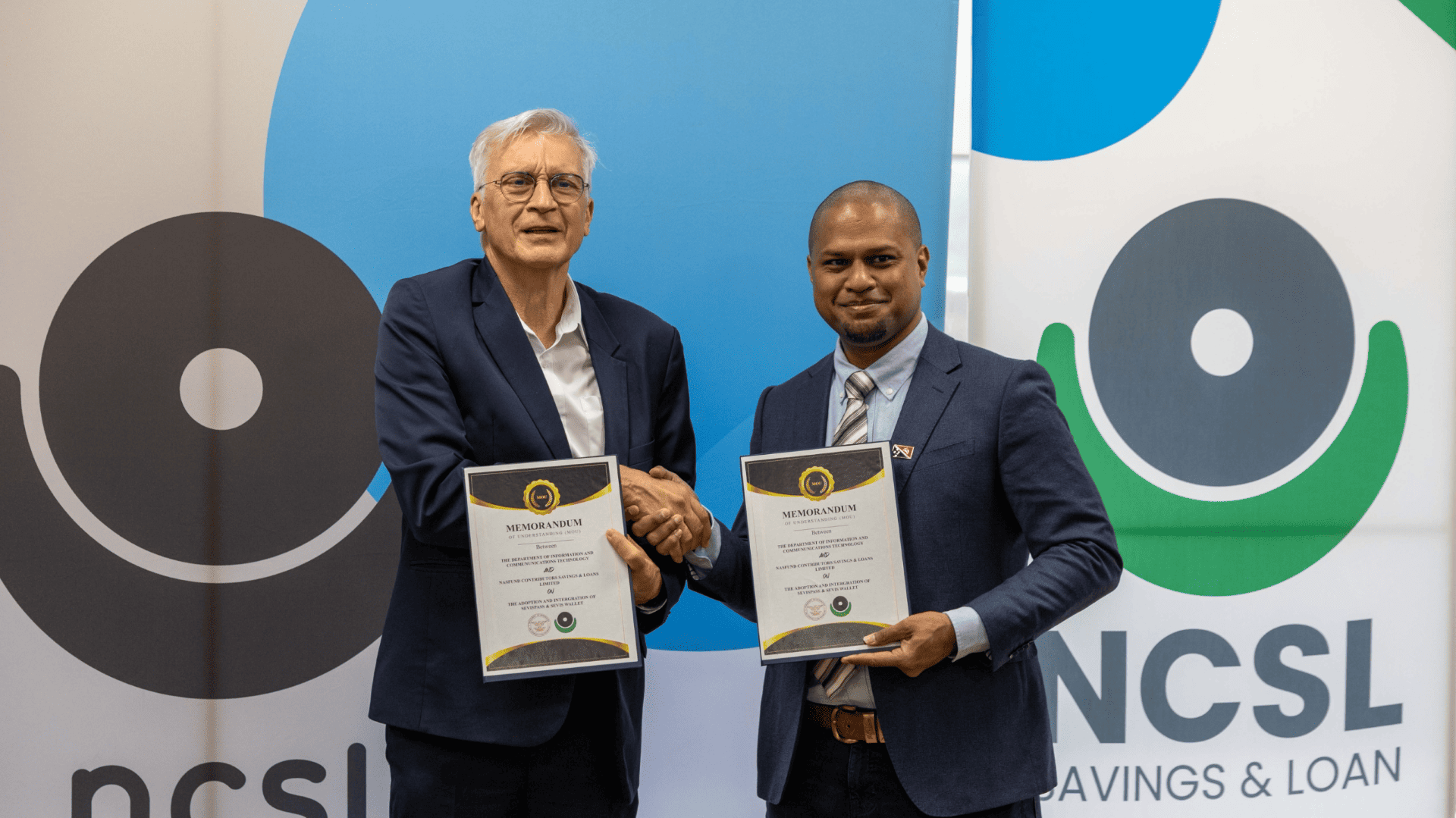
The Department of Information and Communications Technology (DICT) and Nasfund Contributors Savings and Loan Society Limited (NCSL) signed a Memorandum of Understanding (MoU) to work together on adopting Papua New Guinea’s national digital identity and digital wallet services within NCSL’s financial services.
The agreement was signed at the NCSL head office in Konedobu, Downtown Port Moresby, by DICT Secretary Steven Matainaho and NCSL Chief Executive Officer Frans Kootte.
The partnership will see both organisations work towards integrating SevisPass and SevisWalletinto NCSL’s member onboarding, identification, and digital service processes.
SevisPass is the national digital identity service that allows individuals to verify their identity when accessing services. It will support NCSL’s electronic Know Your Customer (eKYC) checks, customer verification, and authentication for its digital services.
SevisWallet will provide a secure place for members to store their digital identity and other credentials, including NCSL digital bank cards. It also supports QR-code and NFC-based transactions.
NCSL has approximately 180,000 members working across various sectors, including agriculture, manufacturing, the public service, and private businesses.
NCSL Chief Executive Officer Frans Kootte said the digital identity service will be useful to members when visiting NCSL branches or accessing services that require identification.
Mr Kootte said NCSL intends to introduce the service to its members, starting with training for its branch staff and business relationship officers. This will help staff explain the service to members and employer partners before the organisation develops its rollout plan.
DICT Secretary Steven Matainaho said the partnership forms part of the Government’s wider Digital Public Infrastructure (DPI) initiative, which aims to provide shared digital services for use by both the public and private sectors.
Mr Matainaho said the government is developing the digital wallet as public infrastructure that can hold different credentials, including membership cards, and support customer onboarding and ongoing verification.
He said DICT is also arranging discussions with the Financial Analysis and Supervision Unit (FASU) on compliance requirements and how shared digital services could assist financial institutions and regulators.
Mr Matainaho said the use of shared digital systems could reduce the repeated collection of customer information, make compliance reporting easier, and lower the cost of meeting regulatory requirements for businesses and regulators.
Under the MoU, DICT will provide technical support for the integration and maintenance of the SevisPNG platform, while NCSL will work towards incorporating SevisPass and SevisWallet into its member onboarding and authentication processes.
Both organisations will also work together on training, provide feedback on the services, and meet their respective responsibilities for privacy, data protection, and cybersecurity.
The MoU provides a three-year framework for cooperation between DICT and NCSL as both organisations work towards introducing digital identity and wallet services to NCSL members.