

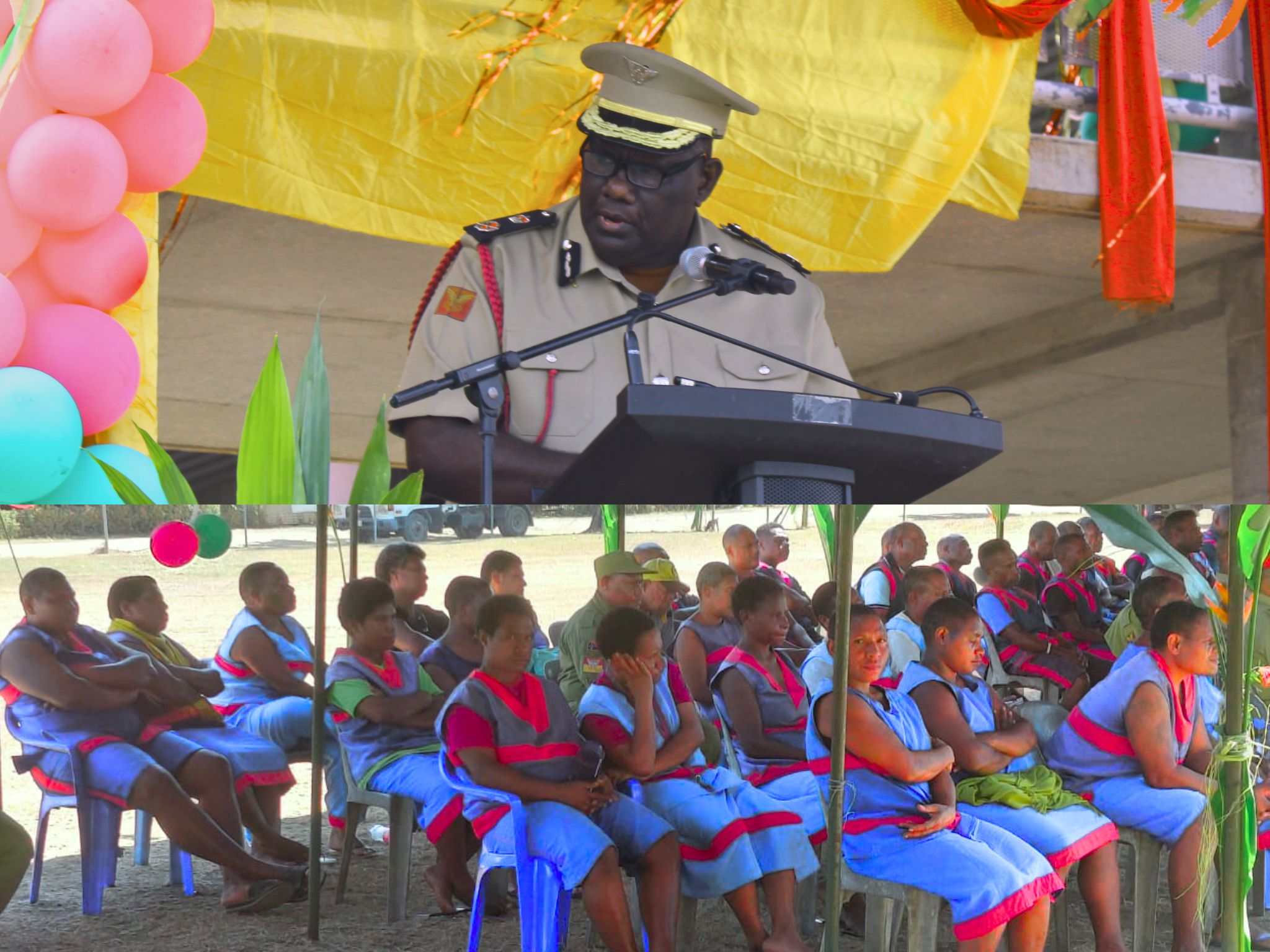
Rehabilitation and successful reintegration into society will become the cornerstone of Papua New Guinea's Correctional Service under Commissioner Noel Sarei, who says prisons must do more than simply detain offenders.
During his inaugural Commissioner Welcome Parade at Bomana Correctional Service Staff Training College on Friday, August 7th, Commissioner Sarei identified rehabilitation as a central priority of his reform agenda, outlining plans to reshape how the Correctional Service prepares detainees for life after prison.
His administration will re-establish the position of Assistant Commissioner Welfare and Rehabilitation while introducing a comprehensive Rehabilitation and Reintegration Policy to guide offender management across the country.
The policy will cover education, vocational training, counselling, community reintegration and post release support, with the aim of equipping detainees to return to society as productive and law abiding citizens.
"This policy will redefine and rebrand rehabilitation within PNGCS, ensuring that every detainee is provided with genuine opportunities to change, develop practical skills and return to society as a productive and law abiding citizen," Commissioner Sarei said.
He said rehabilitation is not only about reducing reoffending but also about strengthening families, improving community safety and contributing to national development.
Commissioner Sarei's vision also extends to Prison Industry, which he plans to transform into a commercially viable arm of the Correctional Service that provides detainees with practical work experience and employable skills while serving their sentences.
He said prisoners should also benefit directly from legitimate prison industry activities to help support their transition back into the community after release.
"A portion of revenue generated through these commercial activities can be returned to the Government through the Consolidated Revenue Fund, while also strengthening the financial sustainability of the Correctional Service," he said.
Supporting the rehabilitation agenda will be reforms to the Correctional Service Training College, where Commissioner Sarei plans to modernize officer training by introducing nationally and internationally recognized qualifications and updating the curriculum to reflect contemporary correctional practices.
Training will place greater emphasis on rehabilitation, offender management, intelligence operations, leadership, ethics, human rights and correctional administration.
Commissioner Sarei said rehabilitation should remain at the heart of the Correctional Service's mission.
"As the Commissioner, I pledge to lead with integrity, fairness, transparency and accountability. Together, we will restore confidence in the service, strengthen rehabilitation, modernize our operations and build a Correctional Service that is respected both nationally and regionally and of course the employer of choice," he said.
He said a modern Correctional Service must not only provide secure custody but also create meaningful opportunities for offenders to rebuild their lives and contribute positively to society after their release.