
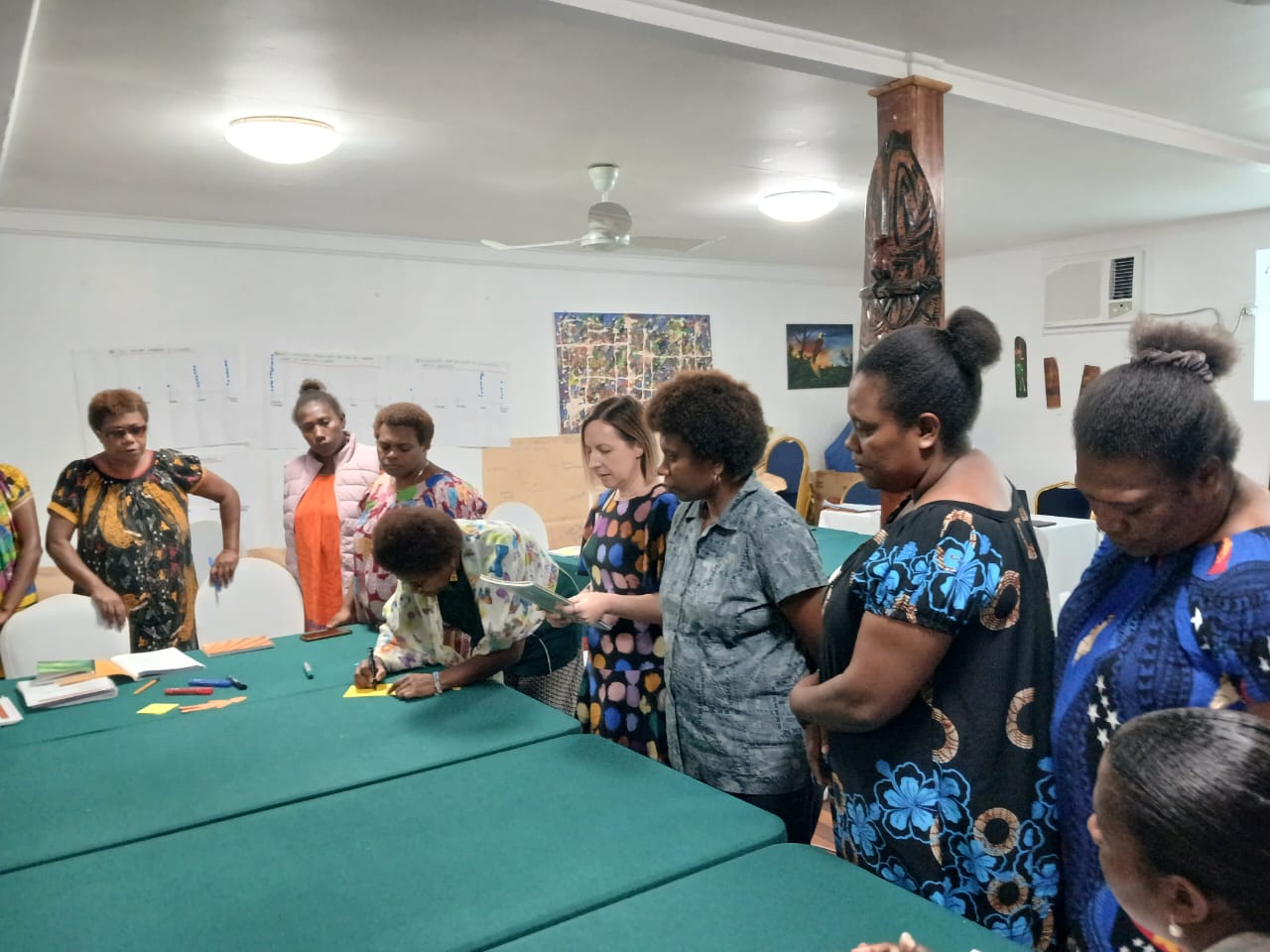
A collective number of health clinicians and frontline workers from the East New Britian Provincial Health Authority (ENBPHA), Catholic Church Health Services, Seventh Day Adventist (SDA) Health, and the United Church Health sector recently partnered with the Burnette Institute for an intensive, week-long adolescent health training program.
The initiative is part of Burnet’s broader commitment to improving sexual and reproductive health for maternal and child health across the Asia- Pacific.
In the province, twenty-five percent of the population is made up of adolescents (10-24 years of age) where there is minimal health care accessibility.
Rising issues encountered as teenage pregnancy, Sexually Transmitted Infection/ Human Immunodeficiency Virus (STI/HIV), suicide, mental health disorders, drug and alcohol abuse, school dropout, and sexual violence, are becoming a barrier for responsive care that health staff need to cater for.
ENB PHA Family Health Coordinator Gerarda Vinia said it is extremely important for health staff to understanding how to respond to sensitive adolescent concerns.
“The focus of the training is on developing the understanding, communication skills and confidence to deal effectively with adolescent clients.”
“Also, staff must know how they can empower young people with knowledge around puberty, pregnancy prevention, and reproductive rights.”
She further stated that it is equally important that adolescents who suffer from mental health are fully assisted well.
“There are a high number of young people tending to drug and alcohol abuse because they are mentally disturbed from problems and psychologically affected.”
“It is a concern for us health to start addressing the emotional, social and psychological challenges.”
As the province’s lead health provider, the ENBPHA faces a lot of challenges in implementing adolescent health care.
Through this partnership with the Burnette Institute who actively conducts Adolescent training in PNG, a practical hands-on guide has been introduced to help clinicians seamlessly integrate adolescent care into daily operations.
The new guide aligns with World Health Organization (WHO) recommendations and national policies to establish youth friendly health services focusing on:
- Privacy space to discuss issues with confidentiality.
- Health workers to be non judgemental when it comes to adolescent space.
- To set up a day at the facility. Currently we have only clinics for mother and children but not adolescence.
- To have enough stock available at all clinics for example condoms, pregnancy test kits and IBC materials.
While this provides a clear path forward, challenges will also be face in terms of implementation such as:
- Putting the skills to work with a private space to accommodate adolescents.
- Referral pathway for adolescent to be strengthened.
- Proper documentation and data analysis pathways.
- Supervision- active supervision and mentoring from senior nurses to build confidence.
The following recommendations have been put forward for the Provincial Health Authority to look into and action which includes:
- Making all clinics youth friendly.
- Ensure that trained staff are present to attend to them.
- Secure supplies or stock should be available at all times.
- Community and parent engagement involvement in adolescent activities.
- Data Accountability- for the National HIV Surveillance System (NHSS) does not capture all levels of Sexual and Reproductive Health (SRH) data.
The ENBPHA has expressed its gratitude to the Burnet Institute and church-run health facilities for their collaborative efforts in elevating adolescent healthcare to a top priority in the province.