

POSTS BY AUTHOR

PNG Haus Bung
 ST JOHN AMBULANCE EXCLUDED FROM 2022 NATIONAL BUDGET
One of the most essential and vital services in the country during times of emergency, the St John Ambulance Services has once again been excluded from the 2022 National Budget plan.
The St John Ambulance services have been very active and committed during the current COVID-19 pandemic, however they have been overlooked again in this budget lockup.
Chief Executive Officer for St John Matt Cannon said they are in disbelief of the exclusion of reference to Ambulance services in the National Budget.
"This decision not to provide a direct funding grant for the ambulance service will inhibit tens of thousands of people from having access to health care in an emergency."
"This will not only disadvantage the 4 million people in rural and urban communities that St John serves, but it will result in significant and preventable loss of human lives."
"If St John Ambulance were to cut services in Papua New Guinea, it is estimated that perhaps as high as 2,000 people will die."
St John is once again calling on assistance to resolve this matter and ensure that basic ambulance services can be provided.
Published on November 29, 2021
 WORLD ON HIGH ALERT AFTER THE EMERGENCE OF THE NEW COVID VARIANT, OMICRON
Nations in southern Africa protested bitterly today as more of the world’s wealthiest countries cut them off from travel, renewing a debate over border closures from the earliest days of the coronavirus pandemic and compounding the problems facing poorly vaccinated countries.
The New York Times reports a new coronavirus variant called Omicron, first detected in Botswana, put governments on edge after South Africa announced a surge of cases this week, plunging countries into the most uncertain moment of the pandemic since the highly contagious Delta variant took hold this spring.
As in the early days of Delta, political alarm spread quickly across the world, with officials trading blame over how the failures of the global vaccination effort were allowing the virus to mutate, even as researchers warned that the true threat of the new variant was not yet clear.
Bearing a worrying number of mutations that researchers fear could make it spread easily, Omicron was spotted this weekend in patients in Britain, Germany and Italy, leaving in its wake what scientists estimated to be thousands of cases in southern Africa and tens or hundreds more globally.
One nation after another shut its doors to southern Africa even as they spurned public health measures that scientists said were far more urgently needed to take on the new variant.
Australia, Thailand and Sri Lanka are among the latest countries to join the United States, Britain and the European Union in banning travellers from South Africa and nearby countries.
Israel announced the world’s strictest ban to date, sealing its borders to all foreigners for 14 days after one case was confirmed in the country.
Prime Minister Naftali Bennet of Israel says the key here is caution and minimal risks until they know more.
Health officials in the Netherlands announced that 61 passengers on two flights from South Africa had tested positive for the virus, the latest indication of how difficult it might be to stop the variant from crossing borders.
The cascade of travel closures triggered a wave of resentment among Africans who believed that the continent was yet again bearing the brunt of panicked policies from Western countries, which had failed to deliver vaccines and the resources needed to administer them.
Scientists said richer countries, having already hoarded vaccines for much of 2021, were now penalizing parts of the world that they had starved of shots in the first place. Francois Venter, a researcher at University of the Witwatersrand in Johannesburg says told you so, referring to warnings from African researchers that delaying vaccinations there risked the emergence of new variants.
Scientists worried that the restrictions would discourage other nations from reporting variant cases, out of fear of being slapped with travel bans.
Border closures have provoked debate during a succession of public health crises, including the Ebola outbreak in 2014, with global health officials warning that such bans can interrupt the flow of medical supplies and do economic damage that makes countries reluctant to report health threats.
The chaotic introduction of the closures in Amsterdam on Friday left some 600 passengers on two flights from South Africa crammed into planes and then unventilated rooms for about 30 hours.
Those who avoided hotel quarantines by testing negative scattered to other destinations after receiving results around 3am Saturday.
Experts say the border closures would wreak havoc in African countries that were counting on reopening.
In South Africa, December is traditionally the high season for tourism, one of the country’s biggest industries, and operators had been banking on a surge in visitors from Britain, which had removed South Africa from its “red list” only last month.
South Africa’s number of daily infections — 2,828 on Friday — was a small fraction of case counts in countries with similarly sized populations, like Germany and Britain, not to mention the United States.
Just over 10 percent of people in Africa have received one dose of a vaccine, compared with 64 percent in North America and 62 percent in Europe.
For the countries imposing travel bans, scientists said, far more consequential than delaying the arrival of new Omicron cases was the question of what they would do with whatever time they had bought themselves to respond.
SOURCE: FIJIVILLAGE
Published on November 28, 2021
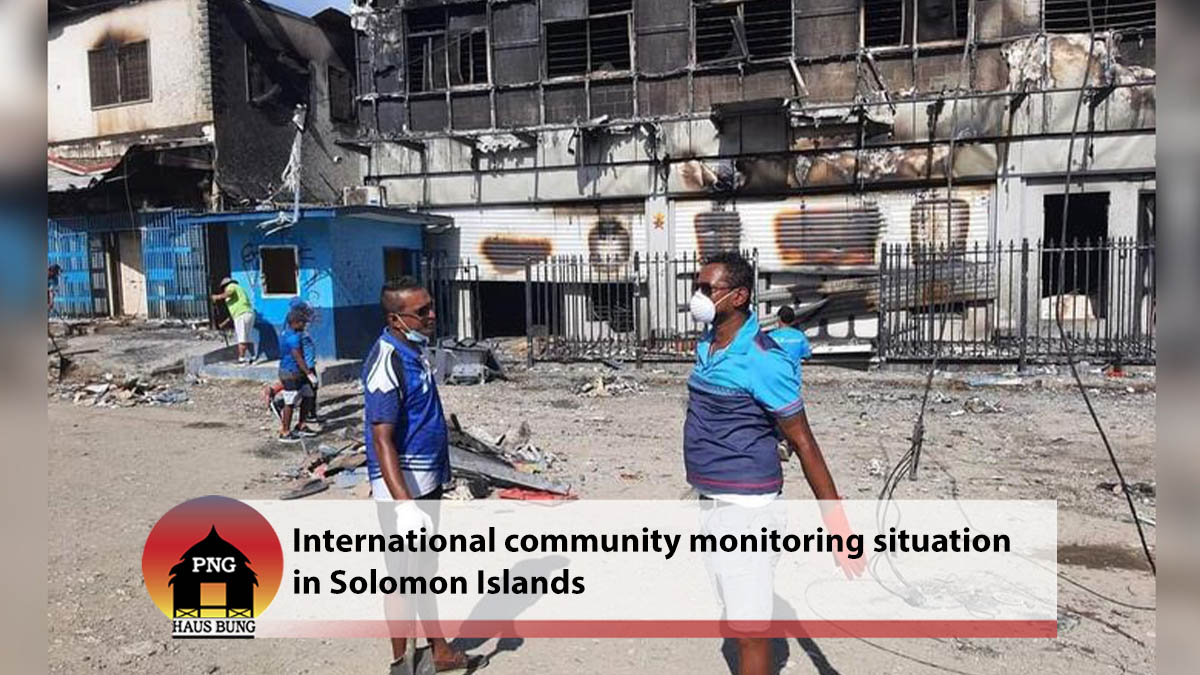 INTERNATIONAL COMMUNITY MONITORING SITUATION IN SOLOMON ISLANDS
With no plans to evacuate their citizens from Honiara, the international community is closely monitoring the situation in the Solomon Islands following a week of political unrest.
There's an air of calm across Honiara this weekend.
Resident Claire Percel puts it down to the arrival of Australian and Papua New Guinea defence forces to help the local police.
She said the reinforcements have "really helped the situation but we're still nervous".
"Roadblocks now set up in key locations and I've seen them check vehicles. Local businesses have started cleaning up the streets and removing the burnt vehicles.
"I managed to get out of the house today for a grocery shop and visit some family. Was a really good change of scenery. I took my kids with me, was a very difficult conversation trying to explain why this happened," Percel said.
There was rioting and looting across the capital following a protest at Parliament on Wednesday calling for the Prime Minister Manasseh Sogavare to stand down.
The protesters are angry at their government's move to establish diplomatic ties with China, after decades of relations with Taiwan. Sogavare has said he will not resign.
The tension escalated on Friday when more than 100 protesters reached Sogavare's residence, throwing rocks while police with riot shields fired tear gas to disperse the crowd.
Australia and Papua New Guinea have deployed their defence force personnel to help the local police control rioting anti-government protesters.
Australian Prime Minister Scott Morrison said the Solomons reached out to his government for help. But he added Canberra was monitoring the situation in Honiara.
New Zealand officials are in contact with their citizens in Honiara and are aware that the travel plans of some have been disrupted.
A spokesperson from the Ministry of Foreign Affairs and Trade said the government has not yet received a formal request for assistance from the Solomon Islands government.
"We are not activating evacuation plans at this stage but remain in contact with relevant partners on the ground and are monitoring events closely.
"The New Zealand High Commission is providing Safe Travel advice to New Zealanders in Solomon Islands, including to follow the instructions of local authorities.
"New Zealanders in Solomon Islands should not rely on New Zealand government-assisted departures in an emergency," the MFAT spokesperson said.
Published on November 28, 2021
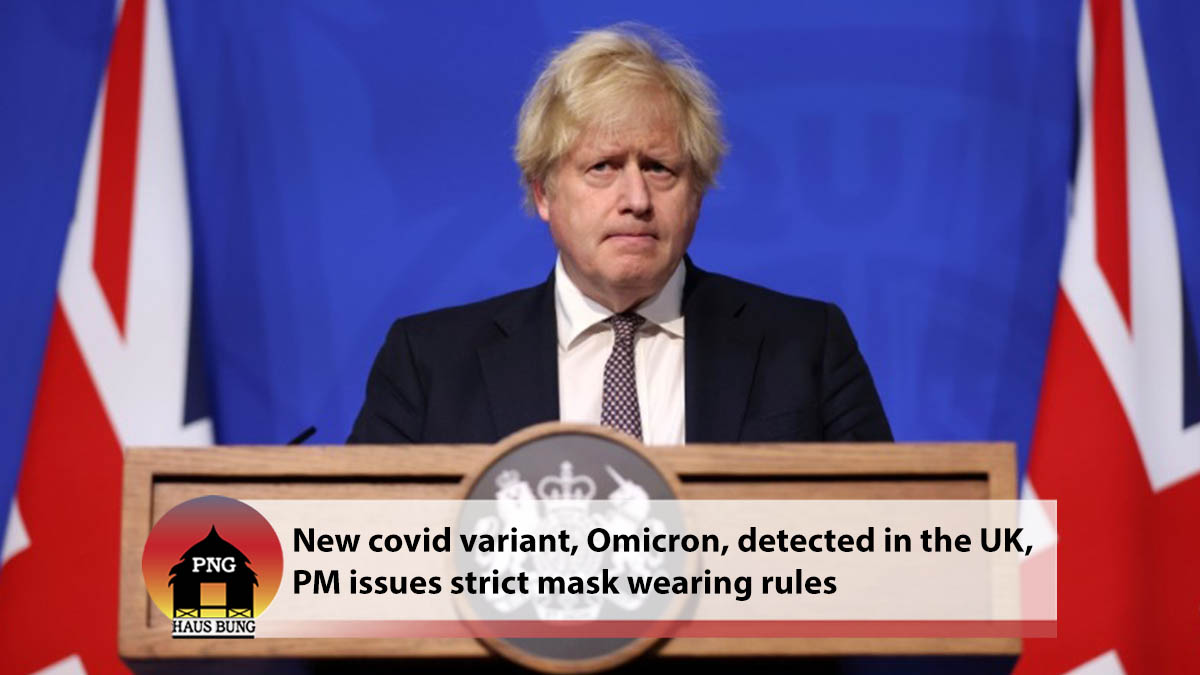 COVID: TRAVEL AND MASK RULES TIGHTENED OVER OMICRON VARIANT
Face coverings will become mandatory again in shops and on public transport in England from next week under a raft of measures to target the new Covid variant, Omicron, the PM has said.
PCR tests for everyone entering the UK will be introduced and all contacts of new variant cases will have to self-isolate, even if fully jabbed.
But Boris Johnson said Christmas would be "considerably better" than in 2020.
The measures were "temporary and precautionary", he added.
Mr Johnson announced the restrictions at a Downing Street news conference after it was confirmed that two Omicron cases had been detected in Brentwood, Essex, and Nottingham. Officials said the cases were linked and connected to travel in southern Africa.
The new variant was first reported from South Africa on Wednesday, with early evidence suggesting it has a higher reinfection risk.
Mr Johnson said: "Our scientists are learning more hour by hour, and it does appear that Omicron spreads very rapidly and can be spread between people who are double vaccinated."
He added: "We need to slow down the spread of this variant here in the UK, because measures at the border can only ever minimise and delay the arrival of a new variant rather than stop it all together."
The prime minister said the new measures would be reviewed in three weeks, by which time they should have better information about the "continuing effectiveness" of vaccines.
The prime minister said the "tightening up" of the mask rules will be outlined by Health Secretary Sajid Javid "in the next day or so". He did not indicate when PCR tests would begin and in a press release the Department of Health only said it was among the measures being "introduced from next week".
Covid restrictions were tightened across the UK days before Christmas last year amid a surge in cases.
Asked by the BBC's Iain Watson if the prime minister could say with any confidence whether or not people could keep their Christmas plans this year, Mr Johnson replied: "We continue to be in a strong position largely thanks to the speed of the vaccine rollout, another booster rollout, and... I'm pretty confident to absolutely confident this Christmas will be considerably better than last Christmas."
Countries around the world are introducing travel bans and restrictions on southern African countries in an effort to contain the variant's spread.
Under the plans:
Everyone entering the UK (other than those coming from the Common Travel Area that covers the Channel Islands and Ireland) will have to take PCR test by the end of the second day after their arrival and self-isolate until they receive a negative result
All contacts of suspected Omicron cases must self-isolate, regardless of whether or not they are fully jabbed
Face coverings will be made compulsory in shops and on public transport - but hospitality settings will be exempt from the changes
The health secretary is to ask advisers to consider rapidly extending boosters, including reducing the gap between the second dose of the vaccine and the booster
The UK's chief medical adviser, Prof Chris Whitty, said there was a "reasonable chance" that vaccines could be less effective against the new variant but stressed people who are vaccinated or receive the booster jab will be less likely to become seriously ill.
He said the Joint Committee on Vaccination and Immunisation would now need to decide whether to extend the booster vaccine down to adults age 18, and whether a second dose should be offered to children aged 12-15.
The reintroduction of masks in shops and public transport brings England back into line with the other UK nations.
Paddy Lillis from the shopworkers' union Usdaw accused ministers of "flip-flopping on basic and sensible Covid measures" and said the face covering rules should have been kept in place when restrictions were relaxed in July.
"Retail staff working with the public every day are deeply worried about catching Covid-19 and the arrival of the Omicron variant is a further concern," he said.
Carol Popplestone, chairwoman of the Royal College of Nursing, said face coverings were "something we have already called for and it should not have been a new variant that forced the prime minister to act".
SOURCE: BBC NEWS
Published on November 28, 2021
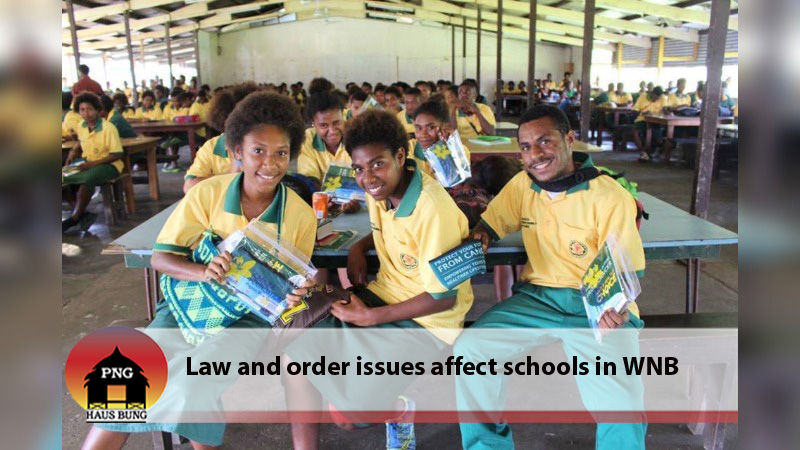 LAW & ORDER AWARENESS FOR SCHOOLS
Law and order issues have increased immensely this year in West New Britain Province due to the eviction exercise carried out by the Provincial government.
The academic year was affected for schools with some schools being broken into, teachers and staff being attacked and students as well.
“Last year, we only had one or two law and order issues in the schools.”
“This year was a worst year for us where we had tried to manage the situation by suspending classes and once the issues were sorted out, we resumed classes again,” said Provincial Education Advisor, Mr Paul Laure.
Laure said that by suspending classes for schools affected, the surrounding communities would take the initiative and hand over the culprits involved to the police to deal with.
“Once the culprits were brought forward and turned in to the police, the classes resumed.”
Laure said that since this was a major issue that they faced this year, he had spoken to the Provincial Police Commander to carry out awareness on law and order issues to schools in the province.
He also notified all schools and had the contact details for school headmasters, principals and head teachers given to the police.
He added that hopefully the awareness program will help curb the law and order issues affecting schools so they won’t have to face the same problems next year.
Published on November 26, 2021
 ENB PROVINCE HOSTS FIRST BIG FREE TRADE ZONE PROJECTS
Papua New Guinea, has been politically independent for 45 years and has gone through experiences like the Bougainville Crisis, the closing of the Panguna Mine, the closing and opening of Porgera Mine, changes in government leadership through votes of no confidence, natural disasters like the Rabaul Twin volcanic eruption of 1994 and now Covid 19 pandemic.
Worse of all is the K7.3 billion dept incurred by the previous government in 2020.
Our inflation rate was predicted by Asian Development Bank (ADB)through its report to increase by 4.2% in 2021 and 4.4 percent in 2022.
This report also predicts slow economic recovery in GDP at 2.5% in 2021and 3.0 in 2022.
All these and others not mentioned, have tested our young nation’s ability to unite as one country and resolved to improve our economy.
WE MUST RESOLVE AS A NATION TO IMPROVE OUR ECONOMY. In doing so we must look at nations that have had an absolute turn around in their economy and learn from them.
Countries like Cambodia, Myanmar, Laos, Vietnam, Philippines, Malaysia, Indonesia, Brunei, Thailand, and Singapore.
There is China with the fastest growing economy in the world and 45 African countries out of 54 are also moving in the same direction.
Then there is Dubai which only had oil as its main source of revenue but today Dubai has sky scrapers where once sand existed and an economy that earned US$330 billion in nine months in 2018.
What do these countries have in common? Rapid income growth.
How do we get there? Papua New Guinea needs to learn the strategy of economic growth from these nations.
Papua New Guinea dreams of rapid economic growth. It has Malahang Industrial Centre in Lae-Morobe Province, Vanimo Free Trade Zone, Port Moresby International Seaport and Napanapa LNG Export Processing Zone.
Projects in various proposal stages are Konedobu Petroleum Park in Port Moresby, Nadsap Special Economic Zone and Labu Special Economic Zone in Morobe Province, Integrated Agriculture Industrial Zone in Goroka-Eastern Highlands, China City and Pacific Fisheries Zone, LNG Special Economic Zone in Ihu-Gulf Province, PNG Free Trade Zone in Emirau-New Ireland Province, Special Economic Region-Manus, China PNG Comprehensive Industrial Park in Aitape-West Sepik Province, Bana Free Trade Zone in South Bougainville in AROB, Finshafen Special Economic Zone in Morobe Province and the halted Madang Pacific Marine Industrial Zone.
As Prime Minister, I hereby announce that the National Executive Council has endorsed the Gazelle Agro - Special Economic Zone and Rabaul Tuna & Coastal Fisheries Export Processing Zone both in East New Britain Province.
These two projects are aligned with our economic growth strategy and conform to Vision 2050, Medium Term Development Plan III, of the Government of PNG.
My government supports the formulation and adoption of a PNG Free Trade Zone Development Policy and Strategic Plan and the corresponding engagement of Development Services International (DSI), an international expert on FTZ with its PNG Partner who will formulate and submit for adoption of PNG FTZ Development Policy and Strategic Development Plan.
The Gazelle Agro-Industrial Special Economic Zone (GAISEZ) Project in the Gazelle District and Rabaul Tuna Export Processing Zone (RTEPZ) Project in Rabaul District as the PNG FTZ Pilot Projects will undertake the formulation of the Project Development Plans.
I convey my gratitude to Gazelle and Rabaul District Development Authorities, their Parliamentary Members Dr. Allan Marat and Minister Jelta Wong, the working technical teams headed by Mr. Sam Manikot with advise and leadership by the Group CEO and Executive Chairman of the East New Britain Development Corporation Limited.
I thank you all for this visionary stance as the way forward for East New Britain Province to progress economically as well as for Papua New Guinea.
The journey ahead is not easy and will test us to resolve as a nation and province, our leaders and our Investment Partners to unite and to achieve the objective.
The people of East New Britain must change their mindset and attitude towards these pilot projects which will provide employment, spinoffs and contribute to the economy of ENB and PNG. I call on the Provincial Administration not to compete with these projects because they are bigger than what you have not delivered over the years.
Gazelle Agro-Industrial Special Economic Zone (GAISEZ) Project in the Gazelle District and Rabaul tuna & Coastal Fisheries Export Processing Zone (RTEPZ) Project in Rabaul District as PNG FTZ Pilot Projects are the first big projects for ENBP after a very long time.
I believe PNG will succeed in economic recovery through FREE TRADE ZONES and we need a Free Trade Zone Development Policy and strategic Plan to guide us.
These two(2) projects will be the biggest investments for the province and I congratulate Hon. Jelta Wong, Member for Gazelle for bringing this two(2) projects this far.
My Government will work closely with East New Britain Province in the coming months to realize these projects.
May God bless East New Britain Province and our beloved Nation of Papua New Guinea.
Published on November 26, 2021
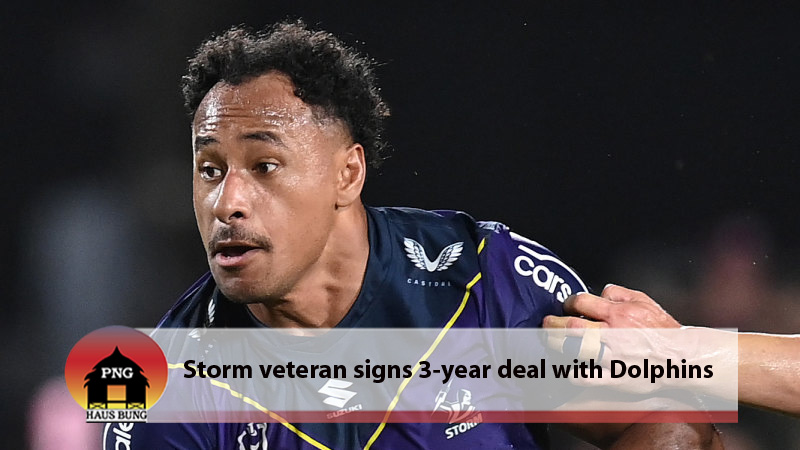 DOLPHINS FINALLY SIGN FIRST NRL PLAYER IN FELISE KAUFUSI
Dolphins coach Wayne Bennett has finally landed his first NRL player, with Storm veteran Felise Kaufusi signing from the 2023 season on a three-year deal.
It’s the first splash the Dolphins have made since the expansion side hit the open market on November 1.
Since that date, NRL players coming off contract at the end of next season have been allowed to negotiate with rival clubs.
The Dolphins have been linked to a host of stars but missed out on all of them, until now.
Tino Fa’asuamaleaui, Patrick Carrigan, Reed Mahoney, Christian Welch, Isaiah Papali’i, Harry Grant, Reegan Campbell Gillard and Cody Walker were all linked to the Dolphins before signing elsewhere.
Kaufusi, 29, has played 152 NRL games for the Storm and represented both Australia and Queensland.
The second-rower played under Bennett during the Maroons’ victorious 2020 State of Origin series.
Former Queensland under-18 representative Harrison Graham was the first player signed by Dolphins but he is yet to make his NRL debut.
Graham is currently training with the Broncos on a train-and-trial contract this summer and could be picked up by the club for the 2022 season.
“It is imperative the Dolphins build a squad that contains players of representative calibre and Felise certainly fits that mould,” Dolphins chief executive Terry Reader said
“He has played 12 Origin matches for Queensland as well as representing Australia, so will bring some important experience to the playing group we are building to debut in the competition.
“The fact that that he grew up in Bundaberg is also a positive for Queensland’s newest professional sporting team.”
Published on November 26, 2021
 INTRODUCTION OF "DOMINANT INDUSTRY PLAYER LEVY” ON 1 JANUARY 2022
Ian Ling-Stuckey, Minister for Treasury, announced the introduction of a “Dominant Industry Player Levy” when handing down PNG’s 2022 budget which comes into effect on 1 January 2022.
The levy applies to any bank in PNG that has total assets that exceed 40% of total assets as published by the Bank of PNG.
"BSP Financial Group (BSP) is the only PNG commercial bank that will be required to pay the levy," said Mary Johns, Company Secretary of BSP Financial Group Limited.
As reported in PNG’s 2022 budget the levy is a flat tax, calculation of which is not linked to profit or balance sheet size, will result in BSP paying an additional K190 million in tax in Financial Year 2022 (FY22).
"The levy is non-deductible and it will have a direct impact on BSP’s net profit after tax of K190 million from 2022 onwards."
Published on November 26, 2021
 ISSUE ON “GHOST NAMES ON PAYROLL” HIGHLIGHTED AT BUDGET MEET
With the increase in budget allocation for public servants’ salaries, the Treasury Department have been asked on what is being done in addressing the issue of ghost names on the payroll.
Executive Director of Institute of National Affairs Paul Barker during the budget lockup yesterday said while there is certainly the need to get more teachers and health workers, there are areas around the expenditures where there is justification for right sizing rather than downsizing.
“I know there was an exercise recently with the Justice Department, especially courts where they found quite a number of ghosts in the system,” Mr Barker said.
“Although I know the Department of Personnel Management and Finance have a few ghosts, when you do have a little sample of people around, you’ll find that they got quite a number of ghosts in their own family on the payroll. So, we know there is a significant number of ghosts in the public sector.”
Acting Deputy Secretary of Treasury Budget and Financial Management Mrs Napa Hurim in response said as part of payroll cleansing, the Treasury Department along with DPM and Finance Department carried the staffing and establishment review this year in order to clear out ghost names on the payroll.
“Through this exercise, we’ve identified names and we’re cleaning up the payroll,” Mrs Hurim said.
“We’ve corrected this out in the Treasury Department as a sample and it was successful and we’re rolling that out on a larger scale.”
“The biggest challenge is at the provincial level. It is easier for us at the national level to work with line agencies but for subnational level, we have to go down and do all the work with them,” Mrs Hurim added.
Published on November 26, 2021
 DIGITAL VIOLENCE IS DEVASTATINGLY RAMPANT
VIOLENCE IN THE ONLINE WORLD IS REAL - IT'S WRONG & MUST BE STOPPED
It may seem like the online world is safe for women and girls. What could possibly happen, at home or in school or in an office, simply sitting in front of a computer?
A lot, it turns out. Digital violence is devastatingly rampant. It is relentless, borderless and often anonymous. By one count, 85 per cent of women online have experienced it or witnessed it.
Survivors may suffer fear, depression and suicidal thoughts, just as they do with other forms of violence.
Digital violence takes many forms. Perpetrators may threaten and stalk women online. They may, without permission, attach pictures of women’s and girls’ faces to sexualized bodies and share them widely over social media, for years.
Vicious online campaigns of hate speech and abuse target women with public roles, such as politicians and journalists as well as women’s rights activists.
While we know that a lot of digital violence is happening, we do not yet know enough about it. To stop it, we need to do more to define and measure it.
We must better understand what forms it takes, what impact it has, and what works to respond to and prevent it.
Wherever violence against women and girls occurs, it is a violation of human rights.
Every year, on November 25, the International Day to End Violence against Women and Girls, and through the UN Secretary-General’s UNiTE by 2030 to End Violence Against Women Campaign, UNFPA takes a stand against all forms of violence.
This year, we are calling on people everywhere to stop violence in the digital realm.
In our increasingly online world, there are too many risks if we do not.
Beyond the obvious threats to mental health and physical safety, digital violence is driving women offline because they cannot otherwise escape from it.
When girls interrupt their education or elected women parliamentarians cannot carry out their duties because of a torrent of online assaults, they suffer violations of their rights. We all lose their capabilities and leadership in our societies.
For these reasons, UNFPA is pushing governments and technology companies to take the lead in halting digital violence.
We are calling on legislators, journalists, civil society and those with influence to speak out, stand up and take action.
One simple yet devastating fact is that women around the world currently have fewer ways to protect themselves online than copyrighted intellectual property.
Violating a copyright can result in immediate removal of materials and criminal and civil penalties. Women and girls facing the non-consensual sharing of their images should have even more vigorous protections.
Digital violence cuts across borders and regulatory systems. Stopping it will require new ways of thinking and new forms of collaboration among regulators, tech firms, digital activists and women’s rights advocates.
A special focus is needed on young people whose rapid uptake of technology puts them at higher risk. They must have the information and the means to fully protect themselves, especially young girls.
Every day, more people, services and activities are moving online.
That means more violence is happening to more women and girls. We must recognize the scope of this crisis and not delay action for even one more day.
The right to live free from violence applies everywhere and does not disappear with an Internet connection.
The virtual is real. It must be safe.
Published on November 26, 2021
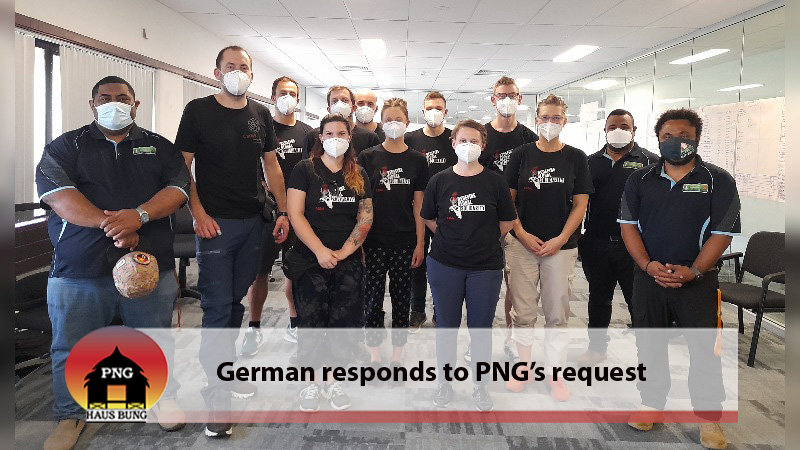 GERMAN MEDICAL TEAM DEPLOYS AT NONGA BASE HOSPITAL
A GERMAN medical team is helping out at the Nonga Base Hospital in Kokopo, East New Britain, and will be there for three weeks.
The team is one of the four Emergency Medical Teams to have responded to Papua New Guinea Government’s request to help in the COVID-19 response.
CADUS Emergency Medical Team is based in Berlin, Germany, and is a not-for-profit organization, and its deployment to PNG has been made financially possible by the German Government.
“We thank the German Government for helping fund our deployment in PNG,’’ said Team Leader Thorben Schulze-Hamann.
“We’ve been deployed in other parts of the world, and this is our first time to come to PNG.’’
Some of the countries that CADUS has been deployed to in the past for natural disasters as well as medical emergencies include Namibia, Bosnia, Iraq and Greece.
[caption id="attachment_17143" align="aligncenter" width="602"] A group picture of CADUS team members with NCC EMT staff[/caption]
The 10-member team deployed to PNG comprises specialists in anaesthesiology , intensive care, surgery, nursing and paramedic. They will be at Nonga Hospital for three weeks, starting last Thursday.
Prior to leaving for Kokopo, they were briefed by the National Control Centre EMT Team Lead Dr Gary Nou and his deputy Dr Kapua Kapua of PNG, ENB, and the health system in the country.
The provinces that have recorded high numbers and ended up in the red or high risk group in the third wave of COVID-19 pandemic include ENB. It is still in the red while many other provinces, including most of the highlands provinces have now moved to the medium risk.
Deputy Controller of the National Pandemic Response Dr Daoni Esorom thanked CADUS for responding to PNG’s request to come and give help.
He said apart from work that they had come to do they should make time to visit Kokopo’s historical sites as they would find that ENB has a long history with Germany.
[caption id="attachment_17144" align="aligncenter" width="659"] National Control Centre Deputy Team Lead Dr Kapua Kapua (front) and CADUS team at the debriefing at NCC.[/caption]
Meanwhile, there is also a medical assistance team from New Zealand that is currently in the country. They have been deployed to Autonomous Region of Bougainville.
Three of their members have also been assigned to help out at the National Control Centre in Port Moresby.
Published on November 26, 2021
 CONNECT PNG LAW UNDERMINES BUDGET PROCESS – ABEL
The Connect PNG (Implementation and Funding Arrangements) Bill 2021 that was passed in Parliament yesterday will commit governments for the next 20 years and undermine the budget process by pre-empting it.
Alotau MP Charles Abel said the main issue in relation to the new law is that this Parliament is trying to make budget decisions for the next four governments.
He said such important legislation committing K20 billion over 20 years to be deposited into a trust account needs to be properly scrutinised and debated upon.
“We have had so many bad experiences with the placement of funds into trust accounts where they tend to bypass proper scrutiny and are abused,” Mr Abel said.
“We have bad experiences with the creation of structures like Kumul and the statutory authorities that undermine government and create parallel systems which results in government budgets having no money and running massive deficits.”
“No one is against building the road network in PNG. In fact, we are talking about the same highways and missing links but each new government simply comes up with a new name for a new program and creates unnecessary confusion amongst government’s agencies and development partners.”
Mr Abel also highlighted as an aside that seaways, waterways and rural airstrips continue to be given low priority.
“My recommendation is that we support the government budget process and oversight, not undermine it like this new law does.”
Published on November 26, 2021